
Scarecrows of Illusion
A tale from real life about the fear of everything new: from television and video to the mobile phone and artificial intelligence.
The Dust

When I walked into the living room I found Nafisa holding her phone, listening to someone, and her face, her features and the furrow of her brow all showed how serious and important was what she was hearing. So I left her alone, not wanting to disturb her or interrupt her call, and went off to the kitchen to make myself my afternoon tea, as is my habit.
When I came out of the kitchen and headed towards my room – or, more accurately, the kitchen of my thoughts – I found that Nafousa had fallen silent and was free to follow me with her eyes, as if she wanted to snatch me away from myself!
I understood what she meant, so I changed course and went over to her, hoping she would tell me, or unburden herself of what was on her mind; it was plain how affected she was by what she had been hearing.

I sat on the sofa facing her and got in first: "Out with it, Nafousa.. you surely have lots of important things to tell!"
She said, bristling: "So you're making fun of me? Seriously, I've got something very serious and important to say, and I'm sure you won't accept what I'm going to tell you.. because I know you!"
I said: "Don't worry, I'm all ears!"
She was silent for a few moments, then sighed deeply, like someone about to dive into the depths of the ocean:
"Umm Zaki was talking to me, and she had lots of important and serious things to say about artificial intelligence and TikTok and all that other nonsense. The point is, she was scaring me about these things, because she'd heard they're devilish, destructive, corrupting tools whose aim is to distract Muslims from their religion and ruin their faith!"
I cleared my throat, but quietly, so as not to kill her enthusiasm, waiting for her to go on. But she calmed down a little, sighed deeply once more, and continued: "And she sent clips of some sheikhs, intellectuals and media people warning about social media and about artificial stupidity!"
I said: "Go on, I'm listening!"
She said: "Do you mean you don't believe them and won't accept what they say? These are sheikhs and people who understand things – would they talk nonsense?"
I said: "Never mind me. Send me what you've got and I'll decide afterwards. But what matters most to me is you – were you convinced by what Umm Ibrahim said, and did you believe her?"
She said, as if gearing up for battle: "You never accept what I say, and you think I'm backward and against everything new. If you don't want to hear any more and have no wish to watch the clips, then I won't send them to you!"
I said to her teasingly: "The pretty one's upset.. the pretty one's upset!"
She gave a hollow, insipid laugh, as though she thought I was mocking her, then fell silent, turned her face away from me and busied herself with her phone, as if to say: leave me alone!
And indeed I left the living room and headed for my private cabin – or, as some call it, the cave – where there is quiet and distance from things that stir up the nerves.
A Tale for Every Age
Suddenly I found her standing at the entrance of my cave, as if asking permission to storm it. I pretended to be busy and indifferent, but I could not hold out against the might of her love, so I said to my Nafousa: "I have a story for you – not from fantasy but from reality and truth, from our own life!"

She looked at me in surprise and said: "You've got a bedtime story?"
She laughed, then burst out laughing, and settled herself as though to show her interest and seriousness; she came and sat in the chair facing me and got ready to listen.
I said to her: Once upon a time, in 1385 AH, Saudi television began broadcasting from Jeddah, and its signal was fuzzy most of the time. Even so, society almost split into two warring – or at least mutually hostile – camps. The first camp had no reaction or outright rejection; they accepted the matter normally, and most of them hurried to bring a set into their homes without any problems. Among them was my father, may Allah have mercy on him: I was surprised by a large German-made television set. I had not expected that; although my father was not closed-minded, I did not expect him to rush to buy the set, which was expensive.
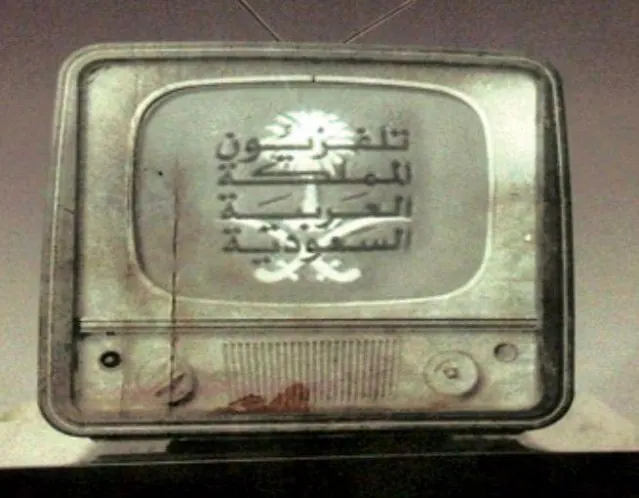
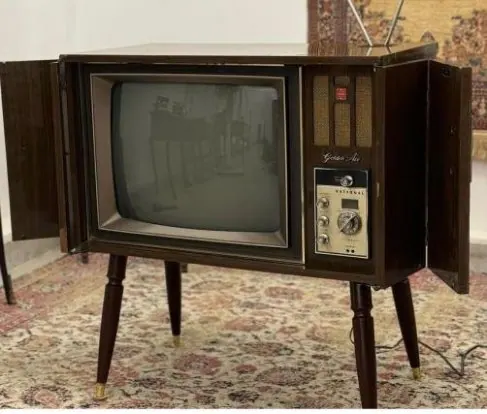
The other camp rejected the event completely; some of them swore by Allah that they would never let it into their homes. But after much back and forth, most of them were forced to bring the set home against their will rather than out of conviction, because they had to go to the neighbours' houses at night to fetch their children, who were usually fast asleep, carrying them home on their shoulders. Some boys even went to the cafés near them to follow what was being shown on television!
The years went by, and when the video player appeared in the early 1390s AH and entered many homes, there was an uproar in society, and some features of its social and family relations changed – perhaps even to the point of people cutting one another off!
The years went by, and when the car telephone and the pager arrived there was a jolt in society, though not a violent one; rather, there was some movement and a kind of development. And before that stir had even subsided, people were passing around news of the imminent arrival of satellite dishes (the 'dish'), and there was great clamour, commotion and confusion; prohibiting fatwas were issued, and inspection teams were even formed to check the shops selling dishes – woe to anyone found with one, for confiscation was his punishment!

Then another storm blew up, about the coming of a new and dangerous guest that would corrupt society and wreck homes: the phone with a screen. Gossip multiplied, and rumours spread that terrified and intimidated people!
After a while the mobile phone with a torch appeared – no camera, nothing of the sort – and its models were hitting the market faster than lightning. And today we see little children using mobile phones with no one watching over them or holding them to account!
And just a few years ago – perhaps you remember – there was all that talk about women driving cars, to the point that some of the objectors and those who forbade it went so far as to predict violations of honour and the spread of corruption. Today we see women driving cars just like men, most of them fully veiled and covered, and what the fearful imagined did not happen, praise be to Allah.

As for the latest issue to occupy public opinion, it is artificial intelligence, which has entered the very core of our lives, its services and applications spreading into most fields. Among some people's exaggerations is calling it 'artificial stupidity'; they find no place for it in their hearts and even reject anything connected with it.
Incidentally, people in general – especially the educated, and above all those who studied scientific subjects – have been dealing with artificial intelligence for several decades without knowing it, through ordinary and scientific calculators!

I paused a little and took a breath, and asked her: "What do you think of what I've said – did you like it, and do you want more?"
She nodded; it seemed she had warmed to the news bulletin I was reciting to her. So, trusting in Allah, I began reciting the rest of the bulletin: "Have you ever read that in the time of Sharif Hussein, Emir of Makkah, when his first personal car arrived, some people hurried to offer it fodder, thinking it was an animal?!"
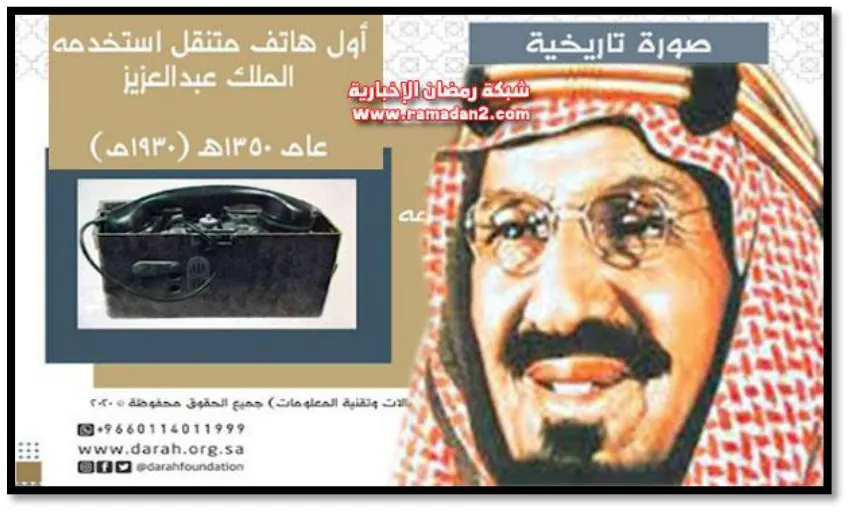
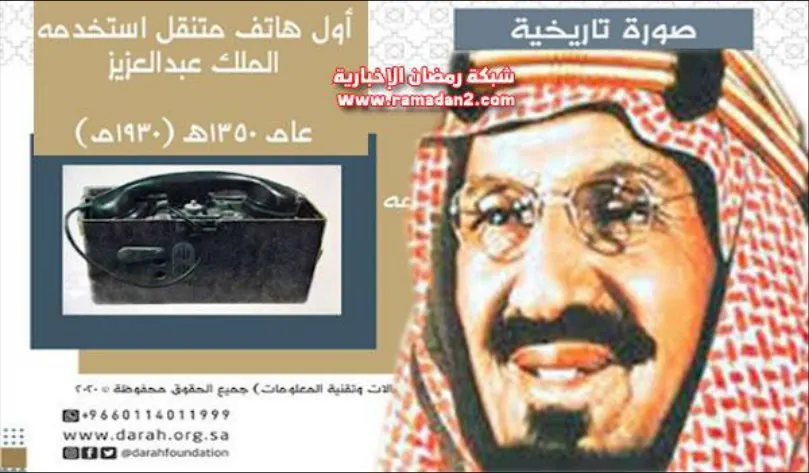
"History also records that when King Abdulaziz used the wired telephone, those around him thought he was talking to the jinn!"
A few moments of silence followed, and I said to her: "Forgive me for going on so long, but I wanted to clarify some dimensions of this issue that we have lived through in our society – indeed in every country in the world – because it is human nature to reject everything new and strange. People's reactions may vary according to their backgrounds, their level of education, the kind of culture they have and their ability to take in the new and strange."
I fell silent, and Nafousa looked at me with wide, staring eyes, as if she wanted to say something stirring within her, but what she said was:
"What you say is true; I've lived through some of these cases and know them well. But where is the problem? Is there really a problem at all, or is this situation natural and inevitable whenever anything new appears?"
Chat, My Friend

I said: "How about we consult ChatGPT? Maybe it has another opinion?"
She said sarcastically: "So we must bring in your clever friends?"
I said: "Not necessarily, but they're ready to serve, they respond faster than humans, and perhaps they have vast knowledge and learning!"
She said: "Go on then, ask them!"
I thought carefully to word a suitable question on the subject, and after a few moments began writing a draft of it:
What are people's reactions when new things – devices and other things – appear? Is this confined to one society rather than others, or is it common to all societies and throughout history?
Not even seconds had passed before my friend the chat began laying out the answer it had in store, so I said to Nafousa:
"Come and see what ChatGPT said"
People's reactions when new things appear – whether devices, technologies, ideas or lifestyles – are almost a recurring human pattern throughout history, and can be clearly classified into well-known psycho-social categories:
First: The rejecters and the apprehensive (the noisiest)
Their traits:
- Fear of the unknown
- Linking the new to conspiracy or corruption
- Invoking religion or values, sometimes without scientific understanding
- Relying on rumours more than on experience. Their common phrases:
- “This is the ruin of morals”
- “It will destroy religion”
- “The end of humanity”
- “An innovation unknown to those who came before”
Historically:
- This was said of printing
- and of the radio
- and of television
- and of the internet
- and today it is said of artificial intelligence. These people usually do not use the new thing… yet they talk about it more than anyone else.
Second: The thoughtless enthusiasts (the impulsive)
Their traits:
- Blind fascination
- Adoption without understanding or controls
- Treating every new thing as total salvation. Their danger:
- They fall at the first shock
- Some of them later turn into fierce rejecters. Third: The balanced and rational (the fewest in number and the greatest in impact)
Their traits:
- They do not reject before understanding
- nor accept before testing
- They distinguish between the tool and the way it is used. Their stance:
- They ask: How does it work?
- What is its benefit?
- What is its harm?
- How do we regulate it ethically?
These are the ones who bend the new to their will instead of submitting to it.
Fourth: The opportunists and the commercially minded
Their traits:
- They care neither for the new nor for the old
- They care only for profit. Their role:
- Inflating the benefits
- Commodifying fear or hope
- Spreading media hype. Fifth: The latecomers (those standing on the pavement)
Their traits:
- They neither reject nor accept
- They wait until the new thing becomes a fact of life
- They come in after the storm has calmed
A Pattern Repeated Through History
| The new thing | The reaction |
| Writing | It will weaken memory |
| Printing | It will corrupt learning |
| Radio | The voice of the devil |
| Television | The destruction of morals |
| The internet | The ruin of homes |
| Artificial intelligence | The end of mankind |
The scenario is the same… only the names change.
The Deep Conclusion
- The problem is not in the new
- nor in the old
- but in the mindset with which we deal with it
The new without reason is danger
and reason without renewal is stagnation
And the most dangerous of people are:
- those who frighten without knowledge
- or who entice without awareness. When Nafousa finished reading, I promised to send her the article on WhatsApp, hoping she would take in the view, be convinced, and forward it to those she knows and corresponds with – because the issue is recurring and historical, not something recent, and it is important that this view be widespread and known to all, so that clashes and disagreements do not arise among them.
I said to Nafisa: "What do you think of what the clever chat said?"
She answered as if dragging the letters and words up from deep inside her: "Honestly, what it says is good, well-ordered and logical, free of agitation, affectation, inflation and alarmism – or even of belittling. The amazing thing is that if the answer had come from a human being, it would not have had this arrangement, this point-by-point refutation, this logical sequence and this precision!!"
I sighed deeply and said: "Praise be to Allah – here you yourself have borne true witness to the power and depth of ChatGPT, and this is just a drop in the ocean, as they say. Of course there are other similar intelligent programs, but frankly they are not at the level of the chat's performance and the breadth of its information."
She said sarcastically: "Aren't you sweet – so you've won against me?"
I said: "Not at all. The matter is no personal battle and there's no individual interest; it is the truth, as the chat stated, and a historical matter – not new, as some think."
The Last Stop
I asked my Nafousa whether she was ready to talk about the subject. She fidgeted a little, as though she wanted to drop it for now, so I said: "Shall we finish it later?"
She nodded in agreement, so I excused myself and headed for my dear cave.
My night nearly went by without sleep, so I persuaded myself to stop even thinking about the subject, and occupied myself by switching on the laptop, for I have plenty of things to spend the rest of my time on.
But despite all my attempts I could not stop thinking about the subject, because it is a public issue that preoccupies most cultured and educated people – not only ordinary folk. They spend long hours pulling back and forth, even without knowledge or practice, and mostly on the basis of what so-and-so says. How much good passes them by, and how much they deprive themselves of, because of apprehension and fears that are mostly imaginary rather than based on scientific foundations and certain knowledge.
Suddenly Nafisa came in, as if she wanted to carry on talking about the subject, so I asked her: "What brings you here? Don't you want to sleep?"
She said: "Honestly, what you said and what your friend Uncle Chat said has taken over my thinking in a frightening way!"
I said: "I've finished presenting what I had, and the chat explained the subject in a wonderful, detailed and precise way. Now it's your turn to have your say!"

She said, smiling: "Honestly, I have nothing to add. Your friend the chat said everything and left no stone unturned."
I clapped warmly, delighted at the conviction Nafousa had reached, and said to her:
"The long and short of it is that the problem is historical and natural to all human beings, not just our society. The train of those who reject new things will never stop, nor will the train of those who accept and are convinced – that is the nature of life!"
She said: "The most important thing is that we understand this truth and take in this rule, so we don't waste our time in endless chatter, quarrels and disputes!"
I clapped again and said at the top of my voice: "Excellent, my Nafousa!"
Then I calmed down and said to her: "This message ought to reach everyone, both the objectors and the accepters, so that they understand, come to terms with one another and accept each other!"
Prepared and designed by Siraj Hussain Fathi. Download the full file as PDF