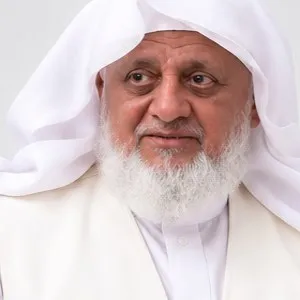
Tools of the Trade!
Forty-four social essays by Siraj Hussain Fathi published in Al-Madina newspaper: the official and his chair, the consumer and the bureaucracy, ethics, the family and society, Ramadan and Eid, with a dedication to his teacher Sibai Ahmad Othman.
Dedication: To My Teacher Sibai Ahmad Othman
The teacher of a generation, at whose hands we learned the ABCs of literature and journalistic writing. The life of this giant has come to its close; he had spent the bloom of his youth among us, teaching us and giving us so very much of his experience
Sibai Othman, may Allah have mercy on him: I will never forget him as long as I live, and I do not believe that anyone who took lessons in literature and journalism at his hands could ever fold his pages away from memory.
We owe him a great many debts. It is enough to say that most of those who sit today at the summits of journalism and literature in our country bear a mark, or marks, of this giant, and that he played some part in ripening their thought and in casting light on their pens and their words. May Allah have mercy on our teacher Sibai Ahmad Othman and grant him a dwelling in the vastness of His gardens
Introduction
When a writer sets down his letters and words, he is in truth draining his feelings and emotions and pouring them out onto the page, in the hope that he may convey to whoever reads him something of what stirs in his depths. If Allah grants him someone who reads those feelings and emotions, then perhaps the message has reached its proper destination; and if that happens, the writer can at last breathe the oxygen he had been dreaming of.
What shakes me to the core is the thought that my lines might not spring from the heart, and that their aim might be what people say of them, in praise or in censure. What a calamity it would be if the sum of a man's deeds on the Day of Resurrection came down to: "and it was said...!!"
I pray Allah to spare us the trials of this world, and to record a reward for us in every letter and word, every feeling and emotion, every step and deed, until we meet Him with sound hearts, and He is pleased with us.
A Breath of Hope
Published in Al-Madina newspaper on Thursday, 1/1/1421 AH
Those who most fully face life, with all it holds of hopes and pains, of pure smiles and stifled sighs, are that class of people who, driven by a sense of responsibility, have taken upon themselves the work of reforming both themselves and others. They are in fact several classes, not one. Among them are the scholars of the Shari'ah, who feel it their responsibility to teach those around them the law of Allah so as to lead them to Paradise and to Allah's good pleasure. Among them are other scholars in various fields, who aim to enlighten people in ways that bring them worldly benefit and serve both private and public interests. And there is yet another group that has shouldered the banner of reform in society, taking the path of the letter and the word as its way of life, and trying to carry out the work of reform as far as it can.
Perhaps all of these are the people most keenly aware of the obstacles and impediments that beset the path of reform, some arising from within themselves and others springing from those around them. One may say that the least of the obstacles they face comes from wife and children, because their daily needs never cease, and these are, in principle, among a man's first personal responsibilities, if he truly feels his real role as husband and father. Then the impediments multiply and vary according to the diameter of the circle that surrounds each of them socially, academically and economically.
The wider the circle, the heavier the cares of responsibility, and the higher the sensitivity of what they say and write. They feel that every word they utter and every letter their hands set down will fall under searchlights that probe into their very selves, into what they want and what they mean. It may even reach the point of holding them to account for wishes or hidden desires attributed to their depths that may not exist in them at all. But such is the responsibility of the word that reformers have taken upon themselves.
And because the cares and consequences of the word are many and heavy, those who bear them pass through various states: moments, or perhaps whole periods, of hesitation take hold, along with a sense of despair and of the futility of what they do, to the point that some of them reach the stage of giving up writing and taking part in this field altogether. By good fortune, there are times when breezes of hope blow, rousing flagging spirits and driving them back into the field time and again. This is one of the most important factors, and one of the most powerful in its effect, in renewing the effort to walk the road once more.
Among these breezes of hope was a letter that arrived from a sister Arab country for one of my friends, whom Allah has blessed with the work of intellectual da'wah and who has written a number of books in this field. The writer of the letter explained that an article he had read by this distinguished teacher in the National Guard magazine years before had changed the course of his life and played a great part in reforming him. This letter is but one example of letters, written and unwritten, that hold their delicate place in encouraging the bearers of good and spurring them on to more work and to continuing along the path of reform. Were it not for the limited space, I would have mentioned other examples of these breezes, which reformers cannot do without, for they are the first glad tidings of the believer.
Tools of the Trade..!
Published in Al-Madina newspaper on Thursday, 22/1/1421 AH
Among the phenomena that catch the eye are the changes in behaviour and appearance that afflict some of those who have been tried with high office and swivel chairs. This is plain to anyone who knew them before and after. Before their appointments you see them as ordinary people whose lives are marked by simplicity and whose dealings are dominated by humility, with a cheerful face and courteous manners. Then, soon enough, things turn upside down once Allah tries them with great responsibilities: a complete about-face, a full one hundred and eighty degrees. And if you try to learn the secret behind that change, you discover the reason is their belief that this is all part of the "tools of the trade"..!
Among these alleged "tools of the trade" is more and more starch in the thobe and the ghutra or shemagh, to the point that one of them cannot turn his head when he speaks to others; indeed, the movements of his hands and the features of his face are struck by the same excess of starch. Some of them understand taking on responsibility as lengthening the thobe by two hand-spans, or at least one, so that you see him dragging its hem along behind him, along with a change of fabric and of tailor too..! Another of the tools of the trade these people imagine is the necessity of changing the car, even if he lacks the means to do so. So he resorts to whatever methods will get him the grand, hulking car that drains from his pockets every riyal of his salary to spare. It raises his level of debt and adds to his petrol bill, for these kinds of cars, as everyone knows, are petrol sinkholes. And should one of them suffer a scratch, or should some boys play with a nail or the like on it, it needs maintenance and bodywork that drain whatever is left of the balance..!
I do not know what these "tools of the trade" these people claim really are. Where did they get these notions that may carry them beyond the bounds of sound human nature, beyond the limits of the Shari'ah, and beyond the customs and conventions recognised among sensible people? Were those entrusted with responsibilities since the time of the Prophet, peace be upon him, struck by these symptoms and these diseases so deadly to sound human nature..?
Is it reported of the Prophet, peace be upon him, that his face grew stern, or that he lorded it over those around him? Or is it reported of him, peace be upon him, that he changed his mount and his clothing on the pretext of work? Or was it rather that whenever Allah granted him provision, he strove by every means to give thanks for the blessing his Lord had bestowed upon him? And what clearer proof of this than the day of the Conquest of Makkah, when he entered it victorious, raising the banner of Tawhid, yet entered it humble before his Lord, lowly and submissive. His Companions after him did not depart from this way by a fingertip's breadth: al-Faruq, Umar, may Allah be pleased with him, entered Jerusalem as a conqueror, proud of Allah's religion, yet at the height of humility and submission to his Lord who had granted him the conquest of that blessed city. How many models and examples there are in the history of the Muslim nation for whoever wishes to follow them.
May Allah Help You, O Consumer
Published in Al-Madina newspaper on Thursday, 21/2/1421 AH
I hesitated long before writing about this issue, which touches the very being of every household and every individual in this nation; indeed, it touches the march of growth and development for which the state, may Allah protect it, has never ceased to spend all that is precious and dear in order to reach the highest standards, so that everyone who lives on this blessed land may live in comfort and security.
From the very first day Allah established it at the hands of the builder-king, the unifier of the Peninsula and bearer of the green banner of Tawhid, the state's concern has been to provide a livelihood and all the conditions of a safe and easy life for citizen and resident alike. For that reason it has borne many burdens throughout the past decades, and how much money and effort it has spent to provide all this for everyone.
Today the state has entrusted some of those burdens to establishments and companies, as part of carrying out the privatisation plan. This is not out of any inability or shortfall in its capacity; rather, it is a matter of giving the private sector the opportunity to play its part in sustaining the building and continuing the giving. For the principle is that this sector should bear a large share of responsibility toward its country and its society. This is no favour on its part, nor a kindness it bestows on the nation; it is the repaying of some of what it owes, and the fulfilling of a duty. The private sector's responsibility is therefore very great, and it has not yet reached even the minimum in fulfilling its obligations toward the nation and the citizen.
As for the issue that has come to embitter the lives of citizen and resident alike and to rob them of their sleep, it is the outrageous increases in the charges for telephone, electricity and lubricating oils. If I have been late in writing about this sensitive issue, I had my reasons, among them, for example, the expectation that the authorities concerned would respond to the many writings that appeared in the newspapers about the matter, calling for a reduction. But, sadly, to this day there has appeared no indicator, no sign at all of any kind or degree of response. So I forced myself to write, in the hope that Allah may place a blessing in these lines, so that they may have some effect on the decision-makers and on those who care for the citizen and the comfort of his life, and that they may set things right again.
I write these lines with complete trust in Allah, Lord of the Worlds, the Turner of hearts, Who governs the universe and the affairs of His servants. From Him, glorified and exalted is He, we hope that He will soften the hearts of the decision-makers who were behind these increases, so that they may reverse them; perhaps they will awaken and look at those around them with realistic eyes, sensing their interests and the need to provide suitable living conditions, especially since these services are essential to every home and vital to turning the wheel of development throughout the whole country.
And if whoever issued the decisions on these increases has some interest, public or private, he must not forget himself and his children, and that they are part of this society. If today he holds a position that empowers him to issue a decision that adds to people's toil and weighs down their shoulders, how fitting it would be for him to remember the supplication of the Prophet, peace be upon him: "O Allah, whoever is given charge of any affair of my nation and is harsh with them, be harsh with him; and whoever is given charge of any affair of my nation and is gentle with them, be gentle with him." It is important to point out here that such charge includes everything connected with the affairs of the Muslims in matters of this world and of religion, among them what concerns merchants and establishments connected with the livelihood of Muslims. And Allah knows best.
Water Beneath the Straw
Published in Al-Madina newspaper on Thursday, 28/3/1421 AH
Many who work in the various fields of the media, or in education and social work, love to sing the praises of our society for still preserving many of the characteristics and qualities that have distinguished it for decades. This is owing to the countless blessings Allah has bestowed upon it, foremost among them the honour Allah conferred on this land by making it the place where Revelation descended and the wellspring of guidance for all humanity, in addition to the principles and values that grew up in the shade of this land from ancient times, even before the dawning light of Islam. All of this may be regarded as a firm foundation for society's preservation of its characteristics and its identity.
Perhaps we do not disagree much with those who rejoice in and sing of these distinctions, for they are blessings Allah has graciously granted us, and the grace and favour are His. But as an inevitable result of opening up to the world since the start of the boom in the nineties of the Hijri century, and the aftershocks that followed it; then the electronic onslaught that accompanied deep immersion in satellite channels and the programmes, films and serials they broadcast; and the ease with which great numbers of citizens travel about the countries of the world during the holidays, all of this has left powerful effects and marks that have eaten into the very foundations of the values and morals of society, sparing neither young nor old, rich nor poor. In this all are equal, like the teeth of a comb, save those on whom Allah has mercy.
It is necessary to shine a light on the young, on whom the negative effects have plainly appeared. Given their importance and their sensitive place in society, it is natural to turn the light upon them and to speak about them with all frankness and clarity. They are the group for whom the state, parents, and reformers alongside them make great efforts to provide a suitable environment, academically, practically and psychologically, for they are the group on whose shoulders the glory of the nation is built, and by whose hands the pages of the future are written.
In Al-Eqtisadiah newspaper, in the issue published on Wednesday, 6/2/1421 AH, Muhammad Izzat Amer wrote an article on the back page entitled "Mixing, Mixture and Mix", in which he addressed the very issue I am discussing: young people, their free time and how they spend it. Knowingly or not, they get caught up in a jumble of practices that some of them may not even enjoy in the first place, such as smoking mu'assal shisha, gluing their eyes to encrypted satellite broadcasts, eating quantities of meat and fat late at night for some reason other than hunger, and improvising trivial tales that have neither beginning nor end.
In the same vein, one educator working in schools set out to identify the most important issues facing young people, through open dialogue with them. The view of nearly all of them was that the problem of idle time stood at the top of the list. And when he probed further with them, he found that most of the young men had rented "bachelor pads" right inside residential neighbourhoods, where they do everything their souls desire, except anything connected with morals or religion. Naturally, the details on this subject would be very painful to the hearts of the sincere, who care for the present and future of this country's youth. Perhaps we shall speak of this issue again, if life allows; and upon Allah rests the guidance to the right path.
Was Ibn Khaldun a Genius..?
Published in Al-Madina newspaper on Thursday, 4/4/1421 AH
I have been enamoured of Ibn Khaldun since my first days at university, when I wrote a modest research paper on him in the field of education, reviewing his educational ideas and views as we see them with contemporary eyes. The deeper I went into the study of his famous Muqaddimah, the more my love and admiration grew for his singular personality. So attached was I to him and to his learning that I published the paper in instalments in Al-Nadwa newspaper during the year 1390 AH. In reading his Muqaddimah I did not confine myself to its educational aspects; I tried to take in most of his ideas, which left no matter, great or small, untouched.
Those who have read or studied Ibn Khaldun's Muqaddimah know the breadth of his learning and his capacity for originality in whatever he wrote, whatever the subject and whatever the field: in education and teaching as in jurisprudence and language, in the arts of history and in sociology, in geography as in politics, and in the other fields of knowledge known in that age. Ibn Khaldun stood out for the number of sciences he chose to write about, and he was masterful and profound in them. This was not peculiar to him alone in that age, for the scholars of that period were distinguished by their encyclopaedic learning; but Ibn Khaldun's encyclopaedism was more comprehensive, and he was creative and inventive, with his own scholarly theories in every field. It is enough that he was the first to speak of sociology, which he called the science of human civilisation ('ilm al-'umran al-bashari).
It is fitting here to ask how far the scholars of our own age, in every discipline, acknowledge Ibn Khaldun's genius, and whether they allow him to sit with them at one table, each in his own field. For example, do scholars of education acknowledge his educational theories, or at least his having preceded them in educational thought, such as his discussion of the harm that harshness does to learners, and his insistence on the need to learn methods of teaching, since teaching has its own principles and rules? Whoever wants the details should go back to the Muqaddimah, where he will find what he would never expect from a scholar who lived some six hundred years ago or more.
As for Ibn Khaldun's views on the political sciences in his famous Muqaddimah, they run to more than thirteen chapters, each of which he gave a title. For example, the thirty-eighth chapter speaks of taxation and the reasons why it falls and rises; the following chapter speaks of the imposition of customs duties at the end of a dynasty; and he follows that with a chapter on the ruler's engaging in trade, and how it harms his subjects and ruins the tax revenue.
Ibn Khaldun was a singular figure who left a deep impression and lasting marks on the history of the Islamic nation, a man who lived in the period between 784 and 808 AH. It is enough that he was the first to write about what we know today as sociology. So was this man truly a genius, or merely a diligent figure imitating others..?!
Transparency: A Demand of Civilisation
Published in Al-Madina newspaper on Thursday, 13/8/1421 AH
In an age of stormy transformations, and with the growing reach of openness to the world, whether at the local level or across the whole world, it becomes difficult to deal with events and happenings, local or foreign, in the manner that prevailed in society in past eras. Minds and concepts have changed, often at acute angles, and at obtuse angles that may exceed one hundred and eighty degrees, among most people. This is a fact that neither young nor old, near nor far, should overlook.
It is well known that the means of communication with the outside world have left no one any reason to retreat into his shell at home, or to close himself off, without the flame of global change touching him with its heat or a spark. It may be self-evident to say that the Arab satellite channels, before any others, have played a great role in this process of change, and the same is true of the local mass media, which have had their effect on the change taking place. We are part of this world, and we ought to be the first to exert influence, especially since the presence of the Two Holy Mosques, and the interests of other countries being tied to oil, make it easy for us to communicate with every country and every culture in the world..!
This is merely a preamble to the idea of transparency, which we have come to need urgently of late, especially with the outbreak of the Rift Valley fever crisis, which exposed many shortcomings, in numerous fields, in the Jazan region and its surroundings. Praise be to Allah that He guided those in authority, especially His Highness the Crown Prince, who would accept no first stop on his return from abroad other than Jizan, a sign of how important he considers learning the facts and following them up himself, may Allah guide him to what He loves and is pleased with. Perhaps in this honourable stance there is a lesson for everyone whom Allah has entrusted with serving this good kingdom, showing how deeply those in authority in this country feel their responsibilities toward their nation and their people. So will officials, junior and senior, take in these lessons from the highest leadership..?
Acquainting people with the truth in any situation and during any event is the only means of warding off doubts and stemming the tide of rumours. This is a Qur'anic principle and a Prophetic rule; were it not for the limited space, I would have cited examples of the texts of the Shari'ah that confirm it, but a hint is enough. Moreover, dealing with transparency is a model of civilised administrative thinking that shows how advanced it is and confirms its strength and steadiness. As for any other approach, it ought to have no place from this day on, for the world has become a single electronic village..!?
There Is Chaos in Our Lives
Published in Al-Madina newspaper on Thursday, 25/9/1421 AH
Many of us practise daily habits which, if we examined them closely with an alert eye and an open heart, we would recognise as chaos itself, pure and simple. At times we may even dare to give these habits names, or descriptions, that are as far as can be from the truth. In our eyes they are "baraka", a blessing, though blessing is innocent of such conduct of ours. Yet if we thought a little, we would say it is mere dervishry, or more precisely chaos, in every sense of the word. And if we traced these habits, we would find behind them a great deal of negligence and indifference; I do not say a great or small amount of ignorance, because many of those who practise these habits hold certificates and qualifications no lower than the general secondary certificate, or are at least half-educated. Take, as examples that have become repetitive and almost permanent, and which some may consider trivial and worthless, but which in reality reveal a chaotic personality, however much its owner may put on airs of learning and wisdom: what some of us do in leaving the upper and side pockets of our thobes in disorder. You find several pens there, especially if the man works in teaching, sharing the space with a collection of scraps of paper bearing personal information or telephone numbers, and some banknotes of assorted denominations. Many of us these days also carry, in the right or left pocket, the mobile phone and the pager, mixed in with a heap of paper tissues.
Some may claim that these are purely personal matters, no one else's business, and that these examples are trivial things that do not affect the individual's behaviour toward others or the level of his performance and productivity at work. But if we paused for a moment and reviewed ourselves with a little frankness and openness, could we not come to see these habits as reflecting a disorganised mentality and untidy thinking, however much learning, wisdom and shrewdness their owner may claim?
Chaos and order are each an integrated whole: a person's character is either chaotic in general or orderly in general, for one individual cannot hold several models within himself; otherwise that personality suffers from a split. And I do not think any of us would accept that description for himself. Moreover, any sensible person must strive for relative perfection, for integration and psychological soundness, which give each of us the full opportunity for productivity that is more mature, more economical of money and time, and of a better standard.
Management, and Again Management
Published in Al-Madina newspaper on Thursday, 23/10/1421 AH
Perhaps it is one of the self-evident truths that escape not even the least experienced and least learned of people that the boom years through which the Gulf region in general, and the Kingdom in particular, passed were not put to fruitful and constructive use. Quite the opposite happened: great sums of money were squandered and many efforts scattered where they did not belong. Naturally, there is no point today in wailing over what is past, for weeping will achieve nothing and will not bring back a single halala. But we must pause to reflect and think about our present circumstances, or more precisely, the post-boom period..!
This pause may be somewhat late, but it is in any case necessary to the utmost degree. In it we must look at the most important of the problems from which we still suffer, which cause us many ills and stand in the way of any attempt at genuine advancement. It is management, and again management. It is management that steers the work in government institutions and facilities, and it is management that supervises and follows up development projects and improvement works.
Because we have been marking time for many long years on numerous projects, some of which have even passed into oblivion, there is a single cause behind that backwardness, namely management. It is to blame for failing to grasp the importance of development; it is what may reject pioneering plans and brilliant ideas, because in its view they are costly or a waste of time and effort. It is management that meddles in what it knows and what it does not, claiming experience and vast, sweeping knowledge of every matter, great and small. And so any idea that sprouts in the mind of one of the institution's staff, even a specialist with knowledge and experience, will meet rejection as long as it was not sown by His Excellency the senior official himself and is not one of the offspring of his own creative mind, for he believes himself the only outstanding mind and the one and only creative talent. Thus, through this mentality, society is deprived of a great deal of good because of this deadly pattern of thinking...!
The strange thing is that this country, may Allah protect it, has an Institute of Public Administration with three branches, in the east, the west and the centre, possessed of human, academic and technical resources in great abundance. This country also has dozens, if not hundreds, of specialists in the sciences of management, modern and old, and we still bring in many experts in this field to train national cadres in the best administrative systems and methods. Indeed, many official and commercial institutions have advanced training institutes and centres. Yet despite all this, our basic problem still lies in unsuitable management. I think so, or what do you say..??
The Coming Civilization
Published in Al-Madina newspaper on Thursday, 13/10/1422 AH
It has become a commonplace to say that the world is now an electronic village, thanks to the new developments in means of communication that have shrunk distances to the smallest degree known to us so far. Throughout their history on earth, human beings lived far apart, because of difficult terrain and the absence of means of transport that would make it easier for them to reach and draw near to one another. One outcome of that separation among people was the many regionalisms, and the rise of civilizations bound to one another by not even the slightest tie, even when they were geographically adjacent or ethnically close. Chinese civilization, for all its antiquity and its depth in history, had no relationship whatsoever with the civilization that lived in India, and ancient Greek civilization had no connection at all with the civilizations near it.. And so we find that all the ancient civilizations, whether those that vanished or those of which some remnants survived, revolved around the axis of limited regionalism and narrow localism, and had no aim of spreading into the other regions of the ancient world. This feature may be closely bound up with the nature of the divine messages, each of which was specific to a particular people, and the prophets were not charged with conveying them to other peoples; or the relationship may be the reverse, that is, the divine messages were revealed in this regional form because of the lack of means of communication and the difficulty of the terrain, and perhaps for other reasons known to Allah, the All-Knowing, the All-Aware.
If we were to review the history of human civilizations in their logical historical sequence, we would find that the only civilization that managed to spread and break out of the bounds of regionalism is the civilization of Islam. This, naturally, is tied to the universal mission this religion carries: the Prophet, peace be upon him, was not sent to the Arabs alone, or only to his tribe (Quraysh); he was sent to all of humanity, wherever they were and whoever they were, and this message transcended the limits of time and place. That is why we find the traces of Islamic civilization in the heart of Europe, in the heart of the Indian subcontinent, in Central Asia, and in the heart of Africa, because Islam spread in those far-flung regions and their peoples took a positive part in building the civilization through which all of them came to belong to Islamic civilization..!
Islamic civilization spread across the earth, or what was then known as the Old World, even though the means of communication and contact between people in that period were no more than they had been before; they went no further than the familiar animals, such as donkeys, mules, horses and camels. If there was any advance, it was the use of carrier pigeons, and what is known of the development of the postal service in the early Islamic era..!
And if there were causes and factors that arose in the course of history and pushed the Muslim nation back to the rear of the caravan, stripping Islamic civilization of its true position at the head of humanity, then other factors may emerge in the present stage of human history, and one of their outcomes may be Islam's return to leadership. For it is the only religion in harmony with the demands of human nature, providing it with everything it longs for: tranquility and inner security, social cohesion, economic progress and political balance. This despite the thickness of the fog and the gloom that covers every sphere of Islamic life at present, despite all the factors of weakness and defeat that appear at first glance in the body of Muslim society, and despite enemies from within and without ganging up to finish off what remains of this nation's elements of strength and unity..!
It is certain today that humanity has no other choice than the civilization of Islam to take it by the hand towards the safe shore. The peoples of the world have tried every creed, faith and sect; they have also tried every kind of political and economic system and ideology, and lived through every school of human thought, yet over decades they have reached no praiseworthy results, achieved no real gains, and failed to build a civilization that elevates man and lifts him from the abysses of injustice, oppression and sin..!
Nothing is left for humanity, in every corner of the earth, but to try Islam as Allah intended it, not as human beings desire it. It has no other choice but to be content with Allah as Lord, with Islam as religion, and with Muhammad, peace be upon him, as Prophet and Messenger. This is what has been confirmed by the events that followed one another over the last three decades, and what came after the events of the eleventh of September in the United States, when people began searching for Islam, wanting to get to know it closely. Islamic organizations in the Western world have confirmed that people are entering Islam in growing and large numbers in Western countries in general, and in America in particular. And who knows: perhaps Allah will decree salvation for humanity from the Fire and its torment in the Hereafter, and from the hell of human deviation in this world.
The Citizen as a Target
Published in Al-Madina newspaper on Thursday, 8 Safar 1424 AH, corresponding to 10 April 2003
For several decades in this precious country, the citizen was target number one in the line of development and improvement projects. Ever since the founding King Abdulaziz took over the rule of this great entity, and ever since Allah granted him success in unifying the regions of the Peninsula, this citizen did not carry some of the worries he now carries night and day, asleep and awake; rather, efforts were at their most intense to provide educational opportunities to every individual living on the soil of this homeland.
One story told in this regard is that some parents of students at Dar al-Tawhid in the city of Taif came to King Abdulaziz asking him to allow them to withdraw their sons from that school. His answer was a flat refusal, and he made them understand that the aim of educating these sons was to bring them out of the darkness of ignorance into the light of knowledge, so that they would become men the homeland could rely on.
The picture has changed somewhat today. Finding opportunities for university education for the sons of this country has become so difficult that many fathers have been forced to send their sons abroad to complete their education at their own expense. And here are the commercial educational institutions, which have opened many of their doors to receive those whose financial circumstances allow, and those who could not obtain the high grades that would qualify them to enter the universities inside the country; otherwise they will stay at home waiting for relief, or look for temporary or permanent work, even if the pay is low.
Just as the citizen was the target of state education, and at the same time the target of comprehensive care by the state, today he has become a target for many government and commercial bodies alike, but in other ways entirely different from what prevailed in past decades. He has become a prize coveted by those institutions, under the umbrella of the services they provide him, or on the pretext of penalties for violations, or fees for the services rendered to him, or taxes, which are almost becoming a new way of life that we have begun to live and are easing into step by step, day after day. The arguments put forward by the bodies collecting these fees and taxes may be logical to some extent, but most of them run counter to logic, or carry within their folds a great deal of exaggeration..!
Among the latest things published in the pages of the local newspapers is an attempt by the Ministry of Communications to collect nominal tolls for using the highways, a piece of news I hope never comes into being in our society. Had we been in a country that relies on taxes in every matter large and small for the running of its life, the matter would be easier; but we are in a country where the citizen lived for decades knowing nothing about taxes, except for the few halalas he paid as the stamp duty on petitions, or in the postage stamps on what he sent through the official post offices. He also paid some fees to the municipalities for the “kushan” (title deed) he obtained when he wanted to build a house, and I know of no other fees the citizen used to pay.
Today, however, the municipalities and the city secretariats boast and race one another along the roads that lead to extracting taxes and fees from the poor citizen by any means whatsoever and under any pretext. We all know that the cost of living in our country over recent years has risen to an unreasonable degree, and the citizen still pays in silence, while the salary scale has been frozen for years, petrol, electricity and telephone prices have gone up, and there have been illogical increases in the prices of staple goods such as sugar, ghee, oil and infant milk, increases in the prices of medicines, and other things that young and old, citizen and resident alike, need. Despite all those increases and rises, the poor citizen has no other choice: either he pays in order to live, or he dies of grief and regret for the days gone by..!
Finally, we stress once again that the citizen was always, through the various decades, the target of easily accessible services, and today he is the target of many government bodies that dream of whatever balance he has in the banks, or whatever he hides under his pillow, and long to get hold of it by any means..!
The Chair and Steadfastness
Published in Al-Madina newspaper on Saturday, 7/4/1424 AH, corresponding to 7/6/2003
It seems that “the chair” is one of the many things that can be considered necessities of life; indeed, for many people it is more important than those necessities. Throughout human history on this planet, a long chain of chair-lovers has formed, if not outright worshippers of it, devoting themselves to reaching it and holding on to it. How many of their lovers these chairs have killed, how many states they have destroyed, how these worshippers grow in number every day, and how many are those who fight one another for their sake!
"The chair" is not merely that object of limited size, varied form and differing value. The real chair is the one that nests in hearts and governs the behaviour of its admirers and lovers. It is the one that possesses a power and tyranny of which it is itself unaware; and despite its ignorance of all this terrifying and overwhelming force it holds, it can move armies, destroy homes, burn the green and the dry alike, and lay waste to crops and offspring. In the Iraq affair we have an example that cannot be overlooked; the details are well known, and examples exist in every corner of the earth..!
I had no intention of speaking about the political side of the question of the chair and steadfastness; that is a field with doors wide open and vast arenas, and talk about it would not stop at certain limits or specific examples. My aim in these lines is to shed light on a particular kind of chair and on its occupants who cannot part with it, or even think of leaving it for a while. They are more numerous than the grains of sand on earth and the stars of the sky, and their number may well exceed the drops of water in the seas and oceans. They certainly grow every day in number, variety and spread, for the chair, in all its shapes and ranks, has a magical power to draw people to it, glue them to it, control their mental and psychological faculties, dominate their behaviour and change it a hundred and eighty degrees, permanently, so that they find no rest and no peace of mind. They are present in every corner of our lives and in every one of its broad fields, and it is not unlikely that we ourselves are among these lovers, for none of us can claim to be immune from any slip, and none of us can guarantee his steadfastness to the principles he is supposed to uphold throughout his life, unless Allah protects him and keeps him..!
Among the worshippers of chairs is the one who has spent his whole life striving to reach one, even if it is merely the chair of a school principal or a small office, because inside him he lives dreams of having power over the necks of Allah's servants and disposing of them as he pleases. He sleeps and wakes every day ruled by a single obsession: how he can tighten the screws on those over whom Allah has extended his hands, and how he can deny whom he wishes and permit whom he wishes, so long as he is the director. In his dreams he may see these poor souls groaning under his sway, moving according to his will and fulfilling his desires. He wants each of them to be like Solomon's ring, as the saying goes, none of them departing from what he commands them, as if he saw himself in the station of divinity, where he is not questioned about what he does and they do not depart from what he wants. He has forgotten that he is merely one of Allah's servants, with no right to ascend the chair of lordship or divinity...!
We surely know some people who, from their youth, would put on the airs of prominent figures, as if they lived for that goal alone. Some of them achieved what they aspired to, and some mounted that chair, or several chairs; but no human being has been granted immortality in this world, nor permanence of glory, and the day came when he was pushed away from his dream and became an ordinary person once more. And how many people, in our society as among others, dreamed of position and prestige but never revealed those dreams to others; and when the opportunity came their way, they rejoiced in what they were given and felt they had attained the ultimate wish. Glory be to the One who does not change! No sooner had the opportunity come to such a man than he turned, changed and transformed; the one who used to proclaim slogans, ideals and principles now turns a blind eye to them at one time, rejects them at another, and even disowns them on occasion, if he does not actually fight those who hold them. Each of us may have a story, or more, about such types, and some of us may be among those whom Allah has tried with these deadly chairs. So I see no need to list further examples; it is enough of a reminder for us what we see every day and every moment of the images and situations of chair-holders. We ask Allah for well-being, for us and for them...!
Comprehensive Security Matters Most
Published in Al-Madina newspaper on Thursday, 15/6/1424 AH, corresponding to 13/8/2003
The traditional concept of security means protecting society from those who commit the familiar crimes of murder, sabotage, theft and the like. This is a sensitive and important role in establishing stability in society, and it can never be dispensed with. But seen from another angle, security has another concept, far more comprehensive and broader than that framework; it encompasses every aspect of life and is not confined to the areas known in the traditional concept. For example, medical institutions, hospitals, clinics, colleges and institutes, all work to provide physical security, supported in this by pharmacies, laboratories and specialized labs. Likewise, industrial, agricultural, commercial and other institutions work to perform the role entrusted to them in providing the basic necessities of human life, food, drink and clothing, and the other provisions that have become part of man's daily life, all of which can be regarded as an environment that is safe physically, psychologically, socially and materially.
Educational institutions, too, schools, institutes, universities and colleges, stand in one rank with the traditional security institutions in entrenching the meanings of loyalty and disavowal (al-wala' wal-bara'), instilling morals, values and principles, teaching regulations and respect for them, and acquainting the young with the meanings of belonging to the faith, love of the homeland, and concern for the affairs of Muslims and the welfare of humanity. These foundations and their like have a strong influence in forming the balanced personality of the individual, so that he feels he does not live alone in this universe but is part of a homeland and a brick in the edifice of the nation, and that he has duties as much as he has rights. All this prepares him to be a righteous human being in every time and place, a builder, not a destroyer, working with those around him with all the knowledge and energy he has been given to build his society, support his nation, and strive to deliver humanity from evils.
No less important and weighty are media institutions in raising and developing the individual's personality. We do not exaggerate if we say that today, by the consensus of all educators and those concerned, they have become more profound in their influence on directing thought and forming individual viewpoints and public opinion. We may not overstep the truth if we insist on placing them in the ranks of the educational and pedagogical institutions, side by side, if not at their head. As is well known and repeated on the tongues of preachers and in the lines of writers, the real and most influential guide of the young today is no longer the father or the teacher, but the television, supported to some extent by radio and the press; and it is certain that no influence, whether home or school, can any longer match the small screen.
These are some images of the institutions that play a security role, from a comprehensive perspective, in society, working in one trench with the traditional security institutions. If we agree on this principle, then they must carry out their usual work proceeding from this vision. I single out here the media institutions in general, and television first and foremost, for it works night and day to shape and program the personality of the individual and of society through its varied programmes and numerous segments, starting with recitations of the Holy Quran and the noble Prophetic hadiths, passing through news bulletins and purposeful awareness programmes, and continuing through cartoons aimed at children, the various local, foreign and Arab serials, cinema films, plays and entertainment programmes. All these and more of what television shows build the personality of the young in a way that may be contrary to what parents and the wise members of society want, and to what educational and pedagogical institutions aim at. And here lies the crux of the matter: the contradiction between the two sides certainly leads to distorting the individual's personality, and may hurl him into the depths of tension and psychological and social disorder; it may even be one of the reasons some young people turn to intellectual and doctrinal deviation, from which, unfortunately, we have come to suffer at every level, and the Riyadh events are not far removed from that.
Duty calls upon all of us, individuals and government and private institutions, the owners of pens and pulpits, the bearers of microphones and others, to stand in one trench and to see this issue, “comprehensive security”, through one lens, so that each of us regards himself as a security man working to protect the whole of society from any intellectual disorder, doctrinal sabotage or moral corruption, and working also to spread sound awareness grounded in the principles and values of our true religion. We must have the foundations from which to set out to achieve the great aims that protect our society, build our nation and serve all of humanity, and we must all be one hand and one heart, that builds and does not demolish, unites and does not divide, guides and does not mislead. And we must not allow any alien, extremist or degenerate thought to take a fitting place among us under any pretext, in any colour or under any banner, for we are a Muslim country and a Muslim society, belonging to a Muslim nation whose Lord is Allah, whose Prophet is Muhammad ibn Abdullah, and whose constitution is the Book of Allah and the Sunnah of its Prophet, peace be upon him, and we can accept no path other than this way.
We and the Swedes..!
Published in Al-Madina newspaper on Friday, 8/7/1424 AH, corresponding to 5/9/2004
I will not speak about the relations between us and the Swedes, whether economic or diplomatic; rather, I will speak about the points of contrast between us and them, because these come first and matter more than anything else. They have two faces, positive and negative, for us as for them. For example, we are one hundred per cent Muslim, while they hold within their folds a Muslim minority; we are counted among the countries of the Third World, backward scientifically and materially, while they enjoy the elation of belonging to the Western world, advanced materially and scientifically. But more important than all this is that the inhabitants of Sweden, whoever they may be, have the means of living available to them in every direction, and they meet no annoyances standing in their way as they see to their needs, especially public services and the necessities of modern life such as electricity, water, telephone and the like.
Everyone who has visited, lived in or learned something about that country agrees that it is among the most refined, cleanest and richest countries on the face of the globe, surpassing in this even many countries of Western Europe and America. Rarely does a resident of that country feel any disgust while doing his work or seeing to his business at any government office, for the system guarantees everyone the fulfilment of their needs and protects them from any obstacles or difficulties, whether built into the regulations or contrived by lazy employees or by people of influence and personal interests who care only about themselves. As a Saudi doctor told me, one who had the chance to attend an international medical conference held in that land a few years ago, the people there, because of the ease they find in every sphere of their lives, end up feeling bored and falling prey to depression, which has given Sweden, for several decades now, the highest suicide rate in the world. This, naturally, is not one of the positives; nor is the spread of moral corruption, which has no equal anywhere in the world.
If Swedish society presents such a negative picture, and perhaps worse, there are reasons for it, the most important being the loss of the dimension of faith among the majority of the population and the dominance of pure materialism over them. It also seems that the ease of life, the ease with which the individual obtains his entitlements, and the provision of his needs without the least effort have turned life into a hell that drives many of their children to suicide. It is as if the difficulties and problems a person faces in other countries in general, and in our Arab and Islamic world in particular, have many positives that we have not yet been able to see or feel; perhaps because we expect the paths of life to be strewn with roses and sweet basil, shaded and easy, and perhaps because we think well of ourselves and want Allah not to put any stumbling blocks before us, whether from the regulations laid down by decision-makers, or from the people who implement them with misunderstanding, narrow-mindedness or ill intent, or from ourselves when we commit violations of the rules or fall short in performing our work, and so cause trouble and hardship for others when they need us.
True, in the language of reason, we do not want to find ourselves victims of depression, nor to see or hear of our children falling prey to suicide; but we cannot do without having matters made easy and the necessities of life provided without hassle, or without the citizen having to press the authorities concerned to provide them, when they are in the first place among the duties entrusted to those authorities, not a favour from them or a bounty bestowed upon him. Nor do we aspire to reach the degree of wealth and luxury that Swedish society has reached. But it is among the ABCs of a secure life in a Muslim society on which Allah has opened the doors of worldly bounty, such as our Saudi society, number one in the world in oil reserves and production, that there should be no one among us stretching out his hands to beg from people, no thief or embezzler; that every young man should have a way to earn a living and lawful sustenance without artificial obstacles or contrived restrictions; and that no one, young or old, should be deprived of acquiring knowledge at all its stages and levels.
It is shameful for us to be in this society while social and economic problems breed every day without our finding solutions that guarantee to end and eliminate them. That is why many of those living among us, and those coming to us from countries of the world who visit or work in our land, cannot understand the intricate riddle we so artfully complicate with our own hands, while we avoid finding radical solutions for it. Meanwhile, other countries that do not have the wealth we have, and whose populations are larger than ours, guarantee every secondary-school graduate his seat at university through the state, not in the corners of commercial private education, which mostly cares only for profit, nor by forcing the young man to study abroad at his father's expense, so that the family bears the negative consequences of that risk, not to mention the exorbitant costs of studying abroad. Here we must ask how possible it is to find radical solutions to all our educational, economic, moral and security problems, and how much time we need to reach those solutions that will put an end to any further negative consequences. It is not necessary for us to become like the Swedes in every matter large and small, but nothing less than making things easier, improving the economic situation, and providing equal educational opportunities for all the sons of society will do. And Allah is the One whose help is sought.
Us in Their Eyes..?
Published in Al-Madina newspaper on Thursday, 14/7/1424 AH, corresponding to 11/9/2004
Many are those who see us, and many too are those who care about us, just as those who do not care about us are many. But those to whom we are bound by ties of religious brotherhood, and the brotherhood of history and race, have countless rights over us, and we over them. It may not harm us what everyone says about us, for we know ourselves best and we know our own interests best; not because the blood running in our veins is pure and immaculate, or because we possess some God-given knowledge, but because it is perfectly natural for a sensible person to know more about himself than other people do, and to know more about his goals, plans and the course of his life than anyone else. Yet there are people who love us and whom we love, and we wish them good as we wish it for ourselves, or more. And because they care about us, they sometimes look at us with pity and fear for us from ourselves, out of the love and sincerity they hold for us, and they want what is good for us. But it may be we who have shut the doors in their faces and put up barriers between us and them, or other factors may have blocked the road between us. They may have a sincere desire to express the feelings, opinions and views that well up within them about our conduct and our moves, but they may lack the ability to get the message across, or their abilities may not allow them to convey what they want in a sound way that we would accept and for which we would be grateful to them.
Some of those who love us see us in a picture they refuse to have us framed in, and they wish we were in a better state than we are. The negative images in which we appear in the eyes of others are many: among them, that we love talk and food and little work, and that we trifle with performing the tasks and job duties we are obliged to perform, for which we take salaries and bonuses. They see us as masters of no trade, unable to do any job, and as people who “drown in an inch of water”, as the saying goes..!
Often, when others speak about us in this language, I tell them about the reality of our society at the beginning of the boom era. Saudi society was a society of “workers”, a “society of toilers”: among us were the blacksmith and the carpenter, the electrician and the plumber, the builder, the painter and the plasterer, and none of them felt the slightest degree of shame at the work he did, because he earned his daily bread by the sweat of his brow. All these beautiful images vanished entirely, or nearly so, when the boom loomed over us with its sweeping currents of money and real estate, and we were inundated by waves of foreign labour, establishments and companies that left us no place except at desks and on swivel chairs, soft beds and velvet curtains. We were also swamped by a flood of housemaids and drivers, along with new car models every year, the annual change of home furniture and electrical appliances, housewives sinking into sleep by day until the noon call to prayer, and sessions of baloot, shisha and mu'assal night and day for men and young men, the spread of casinos and rest-houses (istirahat), and travel abroad for those who could afford it and those who could not. These changes are what upset the balance in every corner of our lives, giving everyone else ample opportunity to look at us through dark lenses, and we keep giving them room, day after day, to confirm these negative images, without trying to correct them or to make a serious change for the better and towards what is right..!
We may not all be living within the dark frame in which those who love us, and others, see us, and we may not all be pleased with the negative images that have coloured our lives; yet we all stand together in the dock, so long as we are sons of this society and the circumstances of social life compel us to interact with relatives and friends and keep up with them when we share their social occasions. This does not mean surrendering to the sweeping current that has overtaken society, nor standing with folded arms before the many negatives that have almost wiped out the positives that distinguished our society for decades.
It is the duty of thinkers and reformers, each from his own position, to awaken concern, spread the creative spirit, and open the eyes of all the sons of society to the bright sides hidden deep within each of them, and to show that each can contribute, with the abilities and energies Allah has given him, to the march of building and development. For the land of the Two Holy Mosques has a special place in the hearts of all Muslims; they expect its people to lead them on the path of guidance and see us as the model to follow. This truth needs no proof, because in their view we are the descendants of the Companions and their Successors, and they imagine that we convey to them a picture of those heroic strivers who made history and lit for humanity the road to a dignified life, and that we can, in the present time, give them a living example of what our forefathers were: racing against time, striving against the self, plunging into the making of civilization; and that we should not be mere followers who go along with the caravan even if it leads to ruin, nor turn in upon ourselves, revolving around our appetites and whims, squandering time and money on every passing trifle.
When the Security Obsession Rises to the Top
Published in Al-Madina newspaper on Thursday, 6/8/1424 AH, corresponding to 2/10/2003
We do not disagree on the importance of safeguarding the security and safety of the homeland from the sabotage of the reckless and the recklessness of saboteurs, nor will we disagree on giving it the attention, effort, energy and time it deserves, for its return, first and last, is to everyone. It is without doubt one of the main arteries that nourish life in any society with tranquility and safety, and hence with psychological well-being, social balance and progress in every field. These truths were confirmed when the security campaigns began pursuing the remnants of terrorism and the tails of sabotage and wiping out their lairs in every corner of our precious homeland. With Allah's help and guidance to our valiant security men, many of those cells have been eliminated and uncovered day after day. This has proven that our country is not a swamp suited to the growth and breeding of parasites and diseased creatures, but fertile soil and a sound environment for every good plant and every righteous deed that pleases Allah, His Messenger and the believers.
And if we have agreed on the need to give the security question the attention it deserves and the time and effort it requires, then we will certainly not be stingy in broadening the concept of this question to include every corner of life that touches the security of the homeland, the citizen, the resident, the visitor and the pilgrim. Nor does this attention mean overlooking some aspects in favour of others from time to time, or exerting ourselves on one side and not another according to circumstances.
If the security situation requires effort to be focused on a particular issue because of an emergency, this in no way means neglecting the other issues that may affect, in one way or another, the stability of security and the entrenchment of a feeling of tranquility in the hearts of citizens; nor that a particular traffic issue, such as fastening the seat belt while driving, should be at the top of traffic officers' concerns, especially during traffic campaigns, while attention to insane speeding and running red lights drops to the tail end of the train. If this actually happened, it would mean there is a flaw in the understanding of the security question and in the application of traffic regulations.
And if the question of terrorism has become something we sing about and chant morning and evening, as others used to do, this does not mean giving criminals and thieves the chance to do as they please and roam and frolic as they like. I do not speak of this angle out of nothing: burglary and theft, especially of homes and in broad daylight, have become among the issues that keep citizens awake at night, not to mention robberies of banks, shops and cars. In fairness, the security authorities are not unaware of what the criminals are doing, but they need to exert more effort and pay much more attention, whatever the circumstances and whatever the emergencies. For whoever steals a needle will find it easy to steal millions, and whoever steals a mobile phone may well go on to steal a bank. It has become well known among many citizens who have been afflicted by the theft of their money or some of their possessions that reporting the crime is of no use. The great majority have become convinced that reporting brings upon the citizen a great deal of questioning, investigation and wasted time, not to mention the marks left on the house by the carbon powder used to trace the criminals' fingerprints, and that the result is known in advance: all those investigations are of no use. We may agree or disagree on the validity of these views, but for many they are a fact on the ground..!
Ever since the distribution of the housing villas in Madinah began, the issue of the thefts that have occurred in many of them has surfaced. Over the past two months, numerous thefts have occurred in locations close to one another. Strangely, these burgled villas are not "tucked away" but on streets that are almost main roads, where traffic hardly stops night or day. Sadly, one of them belonged to a new bridegroom: a quantity of his wife's gold jewellery, valued at some seventy thousand riyals, was stolen, as some of the victim's neighbours told me. Another resident of the same area had his house burgled during the summer holiday and did not feel convinced that reporting the crime was worthwhile, for the reasons we spoke of above. The residents of the area are now in great terror, and as one of them said: we are now waiting for our turn..!
It is perhaps very necessary to ask about the reasons for the frequency of theft in the Housing district (Hay al-Iskan) in Madinah al-Munawwarah and in other districts of Madinah, and why it is so easy for criminals. I can almost state with certainty that the main reason is the low height of the villas' walls and the flimsiness of their doors; and the absence or scarcity of security patrols is among the most important of those reasons. Part of the responsibility must also be laid on the Madinah Municipality (Amanah), since it compels residents to implement its plan and design for the boundary wall, which costs nearly ten thousand riyals to build; and it is known that most residents of this district are of middle or limited income, meaning that most of them cannot afford to pay this sum to provide security for their families and property. The security authorities, too, bear a large share of the responsibility, because they are not present enough on the ground, perhaps because they are preoccupied with the question of terrorism and pursuing terrorists...!
When We Want to Be..!
Published in Al-Madina newspaper on Thursday, 5/9/1424 AH, corresponding to 30/10/2004
The constructive and fruitful life of any individual revolves around a single axis, with no second and no third: “to be or not to be”. Either he is productive in his life, effective, positive and distinguished at the various points of his life, at work, at home and in the street alike; or he is dull, a burden on others, a zero on the left, of no value. Life in its essence does not go beyond this range, within which human beings distinguish themselves and differ according to the effort they put in and the extent to which they activate the personal energies hidden within their breasts.
The individual who aspires to reach goals he has set for himself, and to achieve aims he has drawn with his insight and foresight, will be able, with Allah's help, to achieve all or most of what he longs for, if he insists on following the line he has chosen and tries to devote to it all the means and readiness he can muster. One day he will reach the level he pictured in his imagination of the achievements he wants in his life, for this is the shining truth beyond dispute: whoever walks the road arrives, and whoever sows reaps. These are sayings we memorized and repeated from our earliest childhood, but they need to be put into practice in the various aspects of our lives.
“Purposeful change” in life is a human necessity, and it is a distinction no other creature shares with man, however large or small, and whatever the weight of its brain; for Allah created man to fulfil a great divine will, namely to settle (that is, to build up) the earth and make use of its bounties, and to put to work the treasures of ability and psychological and mental energy contained within him. Had Allah not supplied this creature with capabilities that help him achieve what is required of him, He would not have charged him with worship in its most comprehensive sense; and had man not possessed abilities that enable him to win the lion's share of the earth's bounties and the riches of his own self, he would not have been distinguished from the other creatures.
“Change” in general means: movement and its continuity, and in this sense it is a cosmic law bound up with the ceaseless movement of all beings. The sun, in its apparent orbit as we see it, rises and sets, and so does the moon; and all the galaxies, with their enormous sizes, have paths and orbits around themselves and around one another, in a precise and orderly manner set by the Creator, Mighty and Majestic, to achieve a supreme aim, which is complete servitude to Him, Glory be to Him. Worship of Allah and servitude to Him are thus also bound up with the cosmic law of movement, from which no being, however small or large, is ever free.
And although man shares with all beings some of the cosmic laws and norms, such as the general law of movement and the law of servitude to Allah, he is distinguished from them all by a special law: the ability to make deliberate, purposeful change. This is the basis of the obligations laid upon him during his life on this earth, and it is also closely related to the bliss intended for him in the Hereafter.
Through purposeful change man can raise himself and those around him, and this is one of the factors that have helped human beings build their civilizations throughout history. Even if the historical accounts were true, and they are not, that the first man lived in caves and was ignorant, unable to read or write, and shared with animals many features of life such as eating, drinking and nakedness, we would find that man in fact did not surrender to his condition but moved in the right direction his Creator had decreed for him, and performed his true role on earth, which is to settle it and make use of its bounties. Thus he began his journey of purposeful change towards building civilizations, and he did indeed achieve what he wanted: here he is today swimming in space and diving into the depths of the oceans, while all other living creatures have not changed their way of life since they came into being on the face of the earth, and will remain as they are until Allah inherits the earth and all upon it. They move according to a programmed system that fulfils the demands of the instinct Allah placed in them; they have no active will, nor the slightest degree of the free choice that man enjoys and that helps him towards purposeful, constructive change.
Beyond Awareness
Published in Al-Madina newspaper on Thursday, 16/11/1424 AH, corresponding to 8/1/2004
Education and upbringing are among the most important pillars of successful nations and advanced states; without them no nation will have any standing worth mentioning, or any valuable imprint on the history of humanity. They are a weapon against intellectual and doctrinal deviations, and through them, and nothing else, any state can climb the ladder of glory and provide ample space of economic, psychological and social security. It is nothing new to speak of them from this perspective; what is new is to know what lies behind the train of light they represent for any society. A society of ignorance is an environment of darkness, as though it were among the beings of fantasy and the creatures of legend; whereas a society of knowledge, awareness, culture and mature thought is one whose members can play a role in the epic of enlightenment, advancement and setting out into open worlds and bright, promising horizons. There is no doubt that it will reap the fruits of this in individuals aware of their responsibilities towards their country, their nation and humanity, and indeed even towards themselves. The aware person knows what is due to him and what is due from him; he is a man of his word and a man of principle, better able to confront the trials and disasters his country and society may face, and better acquainted with the demands of circumstances and the changes that arise on the local or global scene. That is why any nation is bound to give education and upbringing the attention, care, money and time they deserve. Man is the most precious wealth, as we know, and the mature, aware human being is the fruit of investing this wealth; he is therefore wealth and fruit at once..!
Any society whose sons and daughters enjoy a sufficient measure of education, upbringing and sound guidance is laying strong, enduring bricks in its great edifice; and the greater the share of attention these two elements receive, the more the outcome serves the towering structure, and vice versa: the more their share of care and attention dwindles, the weaker, more worn and shakier the result, and the consequences are violent shocks and strong tremors that toss the social, political and economic entity about all at once, as a gale tosses a feather, or as the winds scatter sand on a stormy day. There is therefore no escape from providing all the fields and means of educational care and sufficient learning opportunities that keep pace with the needs of society and its members; otherwise, no positive result or ripe fruit can be expected.
Over the decades of the past century, our Saudi society has passed through many stages and developments. Their beginnings were sincere individual efforts to spread education and awareness among its sons; then the march set out, buoyed by the generous patronage of the state and the support of the homeland's sincere sons. And here today the first fruits of those efforts have appeared, and here are the sons of this country striving, with all the mental and intellectual energy, awareness and culture they have been given, to share with the state the responsibility of building, and to create a splendid epic whose threads are love, trust and mutual sincerity between the shepherd and his flock. Here are the National Dialogue meetings voicing what lies within all the sons of this homeland, whose hearts are filled with truthfulness and loyalty to this good land, blessed by the footsteps of the noble Prophet, peace be upon him, the leader of all humanity towards the light of guidance, who carried in his pure and noble hands the banners of true enlightenment for man wherever he may be. And here are the sons of this country, who have rallied around one another under the lofty patronage of their leadership, to say their word, to express their love and sincerity, and to prove to the whole world that we are all one hand and one heart, so long as the banner of Tawhid flutters over our heads, and so long as we bear witness from the depths of our hearts that there is no god but Allah and Muhammad is the Messenger of Allah, and that we all strive for the good of this homeland and work to provide security in every sense of the word. None of this came about except after a fierce battle with ignorance and backwardness; that is, the yield of awareness, education and upbringing serves the country and its people, if they are well invested and well cared for.
Do We Need a National Commission for the Protection of Morals..?
Published in Al-Madina newspaper on Thursday, 30/11/1424 AH, corresponding to 2004/1/22 AD
Perhaps I need not go into much detail to make clear what I am after; a book, as they say, is known by its title, and the title of this article explains what I want. We have established a national commission for the protection of the environment, we have set up friendship committees for patients, and we have established numerous commissions and institutions concerned with the various aspects of our lives. Yet, like the rest of humankind, we have forgotten, or pretended to forget, and intentionally or unintentionally we have not given this grave aspect of our lives the attention and care it deserves, despite our knowing its importance, and despite our acknowledging, and our pain at, the behaviours unfolding on the ground that we reject from within, that our souls refuse, and that our minds can scarcely believe. Worse still, we stand on the threshold of a stage of sweeping change that may cover every sphere of life, which means we will be faced with moral disasters unless we hasten today – and it is already very late - to take action equal to what we will face. We must expect the worst and hope for the best at one and the same time, lest we become entangled and find ourselves caught in nets from which there is no escape and no way out. Whoever does not believe it, let him look at the societies that went before us down the road we are setting out on, and that is coming toward us. It is a realistic view, not a pessimistic one; if anything, it holds a realistic and practical optimism, which we need today more than at any time before. And it is the height of good sense for a person to take precautions before wading into stagnant water and a rotten swamp..!
Concern for morals and the correction of behaviour, together with mature and sound educational guidance, is the very core of life; indeed, it is the fundamental pivot of any civilization of worth. What use is wealth and heaps of gaudy material possessions, and what is the point of certificates and qualifications, high and low, if they are not accompanied by virtuous morals and upright conduct? We are certain that Western civilization, for all that it has reached the summits of material progress, has not managed to provide a safe moral environment, nor has it given this aspect any care proportionate to its importance and gravity. On the contrary, it has helped, and still continues, to supply man with every means of intellectual and doctrinal subversion and moral destruction. And there they are today, groaning under the woes of their civilization, which gave the material side the lion's share of its attention and neglected the moral side to the utmost degree. Regrettably, many of us in this society see civilization only in following the footsteps of the West wherever it goes, and were they to enter a lizard's hole, he would enter it too..!
These are some of the facts we now see before our eyes and live with morning and evening. It is enough to go down any street in any of our cities, large or small, to see with our own eyes specimens of the product of Western civilization walking on their own two feet, and of our own flesh and blood. It is enough to go to the markets to see samples of goods and of women's and young people's clothing that represent no corner of Islamic civilization and bear not the slightest connection to it, as though we had turned into a deformed copy of the West, men, women and children. It is enough to enter any school to see the behaviour of our sons and daughters, which strays far from the manners of Islam. And it is enough to watch any television channel, official or commercial, to confirm that we now boast night and day of the flimsy media vision those channels broadcast, a vision that sees art only as naked bodies, the shaking of hips, shrieking and din; and we see and hear nothing but phrases, words and verses that no sane person would believe come from the children of Muslims and from the lands of Islam..!
Moral decline is an established fact, and we have not yet even plunged into the depths of the materialism of Western civilization. Nor, I think, will we repeat the old record we have grown used to for decades: that our society is still the best on the face of the globe, that we are still fine and all is well. We must acknowledge the bitter truths that have grown in the corners and recesses of our lives, and we must believe what our eyes see and our ears hear. If we do not, we will bite every finger of regret we have, if any are left, and then regret will be of no use. So is the call to establish a national, civil commission for the protection of morals and virtue any less important than protecting the desert environment and wild animals, while we keep repeating that man is our most precious wealth...?
The Civilization of Sham
Published in Al-Madina newspaper on Thursday, 13/6/1425 AH
It is contemporary civilization: an accumulation of diverse contributions by all of humanity in inventing, making and spreading it, even though the general character that dominates it is Western. This civilization, whose praises we sing, upon whose carpet we live and in whose sky we wrap ourselves: when God permits it to pass away and its imprints to vanish, like the other civilizations before it of which nothing remained but some ruins and a few signs, what, one wonders, will remain of it, when it carries the seeds of its own demise and the disappearance of its imprints within its folds? On the tangible, material side, it uses materials and elements that are perishable to begin with, through the end of their useful life and the effects of climate and use. It is well known how widely iron and other metals that lack durability are used, and plastic is considered one of the weakest materials, yet it is used on a very wide scale and in a great many industries and products; however good its quality, strength and endurance, it quickly breaks down, or is at least liable to breaking, change and instability.
Much of contemporary civilization's output, indeed most of it, bears these same traits: a lack of permanence and of resistance to change and to the effects of climate. It is very painful that the most important of the age's products and inventions, the world of information technology, is not far removed from all these factors. This field represents the most advanced and important invention of the age; indeed, it is the very soul of contemporary civilization, holding within it all its secrets, all its information and its documents. Regrettably, whatever the means of preservation and security, breaching it and destroying its components and contents has become very easy, especially for those known as hackers _ that is, information thieves _ whether by destroying websites, spreading viruses in them, or tampering with private and even secret files and folders.
Contemporary human civilization, in this state of genuine fragility, will leave on planet Earth over the coming ages _ if the world endures – no imprints or traces to tell its story to later generations, so long as its products do not carry the elements of their own survival and permanence. Will it be able to make up for what has been lost, and does it have the means to protect its survival and keep its imprints from vanishing..?
People on Limited Incomes
Published in Al-Madina newspaper on Thursday, 1/1/1426 AH
A segment of Saudi society has come to be defined by the size of its income: the one tied to a job, whether government or private, so long as its members own no other resources. This is a description that matches reality to a large extent, for most employees, at every level, have nothing extra beyond the monthly salary they await with bated breath; and if it is late or something goes wrong with it, many of them land in trouble with those they owe. How many are the embarrassing situations in which the poor employee finds himself, especially at the end of Ramadan and at the end of the Hijri year, when the demands of Eid and the house rent fall due! He may get the chance to work outside office hours to improve his lot, but he will not leave the circle of those on limited incomes; and he may fall victim to dubious earnings to meet a pressing need, or to the heavy pressure he meets at home or among his family and relatives..!!
If talk of tackling poverty as an issue takes up much official time and attention, then the issue of people on limited incomes likewise needs a radical remedy. It must be seen through a wide lens, and enough effort must be made to lay down integrated and sound frameworks to resolve it. We have two degrees of poverty: one is overt and has received its due share of study and investigation; the other is disguised and bound up with those on limited incomes. Many aspects of the problem of conventional poverty can be expected to be solved, or at the very least eased, once the problem of limited income is solved. Among the ideas that could be adopted, even temporarily, is granting all low-paid employees a month's salary or more in the blessed month of Ramadan as a gift from the state to its citizens, or it could take the form of a clothing allowance twice a year. I do not think the state would begrudge its children more prosperity and a comfortable living; they are its children, and it is not too much for them to find greater care and attention from their state, especially as the circumstances of life grow ever harder and more severe, and the inferno of prices shows no mercy to the weak in general, nor to those on limited incomes..!
The Tale of a Private Clinic
Published in Al-Madina newspaper on Thursday, 8/1/1426 AH
It is one of the rather old clinics, and with the passing of the years it is only natural that everything in it has turned into something like museum pieces, even some of the people in it, on whom time has eaten and drunk. The tale begins at the entrance, where two and sometimes three young Saudi men stand at reception. They, at any rate, never let a single smile reach their lips, as though they had been brought up in a military college or school. It is said that they answer no phone call from any caller, and it is also said that they treat customers with utter curtness, and I fear they may reach the point of rudeness.
Then we move on to His Excellency the clinic director, who scarcely ever leaves his luxurious office, which he has fitted out with every means of comfort and technology, and an ample supply of cigarette packets. It is enough to stand beside the office door for your breath to be choked by the clouds of smoke seeping from under the door or through its cracks. His Excellency the director, truly respectable and a 'gentleman', knows nothing of the state of the clinic or of what goes on in its corners and nooks in the way of insects, the dirt that piles up, or the old age that has overtaken the building; perhaps he does not even know of the faults that have afflicted the air conditioners. It seems His Excellency lacks the ability to manage his staff, in particular the group of nurses who have turned the place into a café to pass their time, swap whatever gossip they have, and eat whatever sandwiches, nuts and the like come their way, while at the same time we find the essential services that concern their work at the very bottom of their concerns..!
A single tour of this ancient clinic will give you the chance to confirm the truth of this tale, and may well tell you more about its condition and the people who work in it; for so long as the master of the house beats the drum, dancing is the habit of all its household. Perhaps the biggest reason for this dysfunction in this clinic is that its owners live outside Madinah, and perhaps also that they pay no attention to developing this important facility and providing the right environment for an institution that is supposed to be a model for its patients in form, substance and manner. So where is the Directorate of Health Affairs when it comes to this clinic and others like it..??
A Man in Memory
Published in Al-Madina newspaper on Thursday, 15/1/1426 AH
Every nation has its men, and every age has its men. We in this land have been honoured by God with the finest men in all of human history; how could it be otherwise, when at their summit stands the best of them, the master of the first and the last, and with him the best companions history has ever known? The noble chain then continued until it reached us in this age, and God honoured us with men of standing who played a prominent role in shaping our contemporary history. Among them were those who left clear imprints in founding humanitarian projects that went beyond the local to the entire world, through works of charity and goodness that reached far and wide and did not stop at the borders of their compatriots or of the poor Muslims in their own lands; their good reached even non-Muslims.
So that we do not neglect to mention our men, and so that oblivion does not fold some of them away, they must be recalled from time to time, so that present and coming generations may know that in their land there has been a spring of goodness since the dawn of history; that the march of goodness has not stopped at any one time; that in this age, as in the past, mothers' wombs have brought forth men whom time will not forget; and that the future, God willing, will abound with others, because this land is good and its people of virtue are many, praise be to God. This is cause for nurturing hope and awaiting good upon good; and whatever happens, whatever flaws or scratches float to the surface of events, it will remain the bearer of the banner of mercy until God inherits the earth and all who are on it.
For the sake of remembrance and history, I find it necessary to recall Dr. Farid Yasin al-Qurashi, may Allah have mercy on him: how clear were his imprints on the course of voluntary charitable work worldwide, how the International Islamic Relief Organization became one of the gateways of openness to the whole world, and how it came to have offices and branches in most countries of the world, serving as a link between the people of this generous homeland and their needy Muslim brothers, by the grace and help of God, who guided the leaders of this country to support projects and works of goodness at home and abroad. Praise be to God, first and last.
Fatherhood for Takeover, Owner Too Busy
Published in Al-Madina newspaper on Friday, 1/2/1426 AH
Perhaps it is a title that arouses the curiosity of those concerned, or perhaps it gets on the nerves of those who have no real wish to care about such issues, for it is well known that some of us do not like even thinking about the problems and issues we have come to suffer from night and day, and that now rob the wise of their sleep. Regrettably, social problems in our country have grown worse, especially in the last two decades, and it makes no sense to stand before them as spectators, as if the matter did not concern us. What is needed is immediate action, in a civilized manner befitting the developments and changes that have encircled us as a bracelet encircles the wrist. If we do not take the initiative in deed, I do not think our positive expectations for the future will prove realistic; rather, it is the bleak picture that will represent the future on every level and in every direction..!!
Among the prominent problems that have surfaced is the deterioration of family relations in general, and of the relationship between parents and children. Even if its outward appearance is healthy, or even glittering at times, the irrefutable facts confirm that deep down it has all but lost any meaning of life; indeed, it is almost in the realm of nothingness..!
Strangely enough, the generation of fathers I am talking about is not the one past sixty and seventy; most of them have not yet reached fifty, and most of their children are, naturally, still in early adolescence or childhood. This means that the present generation of fathers is itself still in the stage of youth, and that it has received a great deal of education, doses of awareness and knowledge of world affairs and the changes in it. Yet, sadly, it has benefited nothing from what it learned, nor tried to apply the doses of educational and social awareness and enlightenment that teem in the arena of life through local and international media. This is a dangerous sign that this generation needs early rehabilitation, before matters get out of hand and it loses its grip on the reins of leadership and parenthood, and then regret will be of no use...!
Among the signs of the deterioration of parental relations inside the family and outside it is the parents' failure to grasp the psychological, social and religious needs of the young, especially if one or both of them are employed and too busy for proper and complete care of their children. It seems that some fathers and mothers believe their duty is confined to providing food, clothing, shelter and amusement, without giving enough room for the children's emotional and educational fulfilment, which drives the children to look for it by wrong means and in wrong places. This in turn leads to social, behavioural and academic problems breeding among their children, and from there the complaints about them rise in the media and in public and private gatherings, without those concerned trying to shed light on the heart of the problems and their source, namely parents' neglect of their children, and instead trying to hang them on the peg of other parties, such as the media, which are not free of responsibility but are not everything. A balanced view of the issue obliges anyone who wants to work on solving these issues to shed light on all the factors and causes that lead to the birth of these problems, and then to think of solutions for each cause in keeping with its nature and components..!
Perhaps among the most prominent and quickest solutions proposed for these problems is to rehabilitate the parents who have got caught up in them, to make them aware of their educational and guiding duty toward their children and of the importance of building strong, deep relationships with them based on friendship, not domination; and to make the children feel that they matter and have such a place that their parents devote themselves to them as fully as possible, so that they obtain a sufficient degree of balanced emotional fulfilment and come to feel true parenthood, and thus feel reassured and psychologically and socially balanced. This is the best approach that will enable parents, God willing, to deal with the problems that arise between them and their children. In addition, the many courses, books and magazines specializing in this field are helpful and effective aids for society, and for parents in particular, in trying to solve these issues.
Shedding One's Self
Published in Al-Madina newspaper on Thursday, 7/2/1426 AH
A person may perhaps be entitled to disown his religion, his people or his homeland, and perhaps even his family; but how can he shed his own self? If he does so, he may have lost his mind, or been forced into it under certain pressures, and this is the most impossible of impossibilities. Ridding oneself of one's very self is no easy matter, nor possible at all, for whoever does it of his own free will and in full awareness is truly not sane in the least, and I do not think anyone with even an atom of sense would reject this view. It is part of the completeness of God's blessing upon a person that he is aware of his own self, keen on its benefit and on raising it toward the better in all things. As for one who accepts humiliation, abasement and lowliness for himself, he has no weight in life, and in the eyes of others he is contemptible and base. As the poet said: “Whoever is easily degraded finds degradation easy to bear; a wound brings no pain to a dead man.” And this is the state of many of the sons of the nation today, now that they have shed the values and principles with which their Lord honoured them when He made them heirs to His religion and made them part of the nation of His Prophet Muhammad, upon him be blessings and peace. Today they pant after every croaking voice and repeat everything they hear without awareness or the least thought. They have no distinctive character in their clothes and the adornments that go with them, as though they had no roots at all, nor in their music and their dancing; indeed, not even in their celebration of occasions that have not the slightest connection to their nation, while at the same time many of them shun the occasions that God has prescribed for them, for which you find no trace of interest or regard in their hearts.
BBC Arabic Radio in London reported that all the capitals of the Arab Gulf states celebrated Christmas except Saudi Arabia: the streets and squares were decorated, and the markets, needless to say, did not forget the occasion, providing the public with everything it needed for it. But it seems the London radio forgot that some markets in the Kingdom were not stingy with the lovers of this purely Christian occasion and brought in Christmas trees for them; I found them here in Madinah at the end of the Gregorian year, that is, shortly before the holiday. Likewise, some shops and toy stores in the Kingdom have grown used to selling greeting cards and decorations connected with Christmas, and were it not for the vigilance and follow-up of the authorities concerned, our markets would rival others on this occasion, for the disease has spread through many hearts. It is painful to find some members of the Arab Muslim communities living among us trying to take part in the occasion, if only by exchanging greetings among themselves. Perhaps in this lie some of the signs of shedding one's self, and of trying to flee the true character that God intended for this nation.
The One and Only Person
Published in Al-Madina newspaper on Thursday, 26/3/1426 AH
“The one and only person” is a phenomenon, or very nearly one, in our society in general and in our government institutions in particular. No sooner do signs appear on the horizon that one of the employees is beginning to stand out than the spotlight snatches him up and the tasks pile up on his shoulders, as if no one else had yet been born to bear burdens as he does, or as if others did not possess the abilities he possesses..!
If there is anything positive in this administrative behaviour, it is merely that it shines a light on one living cell out of millions of cells that hold within them the elements of life and giving. That is to say, it is the duty of those in whose hands decision-making lies to search for the latent energies in the corners of their institutions, energies killed off by rigid administrative thinking and by sick hearts. Administrative laziness may well have played a large part in such closed-minded choices, which will not take even a little trouble to search for the capable people scattered within the walls of government institutions and facilities. In this lies a grave injustice, and a deterioration of the administrative mentality..!
In our society, as in others, there are thousands of people with abilities, talents and active energies. Some of them are able to stand out naturally through their good performance and their mastery of the responsibilities placed on them; many do not know that they themselves possess the elements of quality and excellence; and a few of the capable do not seek any arena in which to appear at all, fearing that tasks will pile up on their shoulders and avoiding attachment to the occupants of the chairs, because of the drawbacks of that and its effect on the course of their private lives.
If public-sector employees live within a framework full of administrative and organizational contradictions and tensions, then it is the duty of those who hold the power of decision to keep before their eyes the question of justice among those whom God has placed in their charge: giving everyone the chance to gain experience and develop their performance through training and qualifying courses that help them perform well and bring out the abilities and energies stored deep within them, rewarding the outstanding and holding the negligent to account within the bounds of justice, especially as we stand at the gates of what is called e-government.
Rationalizing Celebratory Occasions
Published in Al-Madina newspaper on Friday, 26/4/1426 AH
Not a month, or a few months, goes by without some of our government institutions celebrating an occasion of their own, or a general local or regional occasion. The reasons that lead these institutions down this road may be reasonable, and they may not; but whatever these justifications, there is an important issue that must be taken into account in every celebratory step any government institution wishes to take: how far society in general, and the institution and its staff, actually need this celebration, and what return it brings to the institution and to society. Many question marks must also be placed over the sources of funding for the celebration and how the money needed for it is collected. Does the institution have projects more important and more necessary than this celebration? Were the institution's staff forced to pay, even at the expense of their families' essential needs, or at the expense of the needs of society and its people..??
We may not disagree on the importance of holding some annual celebrations, periodic meetings or major conferences, if there is something to justify them and they bring a positive return to the institution and to society; at times they may have the force of necessity, and they may be among the priorities of official and social work. But if there are no reasons to justify holding them, and the aim is merely to keep up with others, to show off what the institution does, to prove the abilities of the institution's leading figures, or to serve personal ends, then this is something logic does not accept and sound reason rejects, especially if the celebration will waste time, money and effort that ought to have been spent in their proper place. More important than all this is that in many places we suffer the bitterest hardship when we need to provide basics, finding our hands tied for lack of sufficient liquidity, whereas for these celebrations we move heaven and earth, even at the expense of priorities. Is this not something that raises questions and calls for a great deal of thought, verification and investigation..??
Have Mercy on the Hearts of the Weak
Published in Al-Madina newspaper on Monday, 29/4/1426 AH
When official orders are issued appointing someone to a high post, or when the terms of some of society's prominent figures are renewed, the pages of the newspapers fill up with congratulations and felicitations on the occasion, which many believe to be a happy one, deserving of praise heaped on without measure. These people forget that responsibility carries another reckoning besides the bill for celebrating it, and they forget, or pretend to forget, the worry it brings in this world and the disgrace and remorse it may leave behind in the Hereafter. If only they would add to their list of phrases and words expressing their joy at the appointment of So-and-so and the renewal of Such-and-such a few words to say to him: May Allah help you, may Allah grant you success and guide your steps; and remind him that on the Day of Resurrection it is disgrace and remorse..!
If only the people who offer these congratulations and felicitations, and who spend thousands, perhaps millions, on what they publish in the papers or on the gifts they present to the holders of high office, would remember that what they do and the money they spend may well fall under the heading of bribery, especially if they are among those whose work and trade are tied to these officials. For they are usually the owners of large establishments and companies seeking the biggest slice of the cake, and so their congratulations cannot be described as offered purely for the sake of Allah. Otherwise every citizen, especially the weak and the poor, would hasten to publish congratulations and felicitations just as the owners of these big establishments do..!
Here I address this question to those in authority and the decision-makers in my country, and to the official religious institutions that hold authority and give rulings: how legitimate is what these merchants and company owners practise on the pages of the newspapers, or through the gifts, open and hidden, that they present to the people of rank and power in our country? And could firm official decisions be issued to prohibit these illogical and illegitimate practices, in protection of the public interest and in mercy to the hearts of the weak, who cannot keep pace with the big sharks whose only concern is to secure their private interests, even at the expense of the homeland and the citizen, or at the expense of religion, trust, values and principles..??
Recommendations and Resolutions Below Zero
Published in Al-Madina newspaper on Thursday, 2/5/1426 AH
Some years ago a scholarly symposium was held which, for specialists, was an opportunity to benefit from the research and discussions presented there. The closing session was rich in debate and in sound scholarly viewpoints, and, as usual, the recommendations were reviewed and discussed. Among the symposium's recommendations was that it should be held every year, given the pressing need for it. Years and years have passed and not a single session has been held, and as far as I know, the honeyed wishes and fine ideas that the participants in that "orphan" symposium were so enthusiastic about have never turned into a living reality that engages with the needs of the field of education and upbringing..!!
Talk of this symposium is only an example, by which I wanted to shed light on the scholarly conferences and symposia held from time to time inside the Kingdom and abroad. How many specialised scholarly conferences and studies have been conducted, only to meet their inevitable end in their authors' drawers or in the files of the institutions concerned; and if time is generous to them, they see the light in the form of a book adorned with charts and statistical analyses, with the logo of the institution or conference printed in pretty colours on the outer cover..!!
Our question concerns the absence of any practical application of all the effort and energy spent on preparing and writing these research papers and studies, and on turning them from mere good and sincere wishes into a tangible reality that affects the lives of individuals and society. What prevents us from actually benefiting from them in real life? Why is that effort squandered and lost in vain? What are the causes of this tragedy that we witness and live? And will the time come when scholarly conferences play a real role in changing the face of life - scholarly life at least - if not all of it..?
I fear that a sense of frustration will grow among the staff of academic institutions, driving them not to take part in any scholarly events in the future. These institutions, indeed society as a whole, would then lose a great deal of intellectual energy and human potential. As is well known, human wealth is not the least important or least sensitive of resources; rather, it is the most essential and the most precious of them, and thinking minds and creative talents stand at the very peak of the pyramid of this wealth. So do we give them the climate they deserve, one that suits their needs and aspirations?
Contradictions in Our Lives
Published in Al-Madina newspaper on Thursday, 1/6/1426 AH
At a time when serious efforts and attempts are being made to launch what is called e-government in every official institution, many government facilities still suffer from failing traditional performance and backward administrative thinking. And at a time when there is a drive to introduce what is known as the e-book in our schools, many of them still lack the most basic educational equipment. Indeed, many of our secondary schools, inside the cities, not in the villages, do not even have ordinary computer labs or laboratories in which science-stream students can carry out experiments. So how can we leap ahead to realise the pioneering vision of automating administration and doing away with paper..?
Before we race at lightning speed towards automation, we must ask ourselves what we actually need in order to bring about a radical, positive change in our lives. Do we need to own heaps of equipment and gadgets so that we can claim to have reached the summit of technology? Are we in dire need of more clamour, drum-beating and trumpet-blowing to achieve goals of ours that we know nothing about? Do we have enough coherence and harmony between what the citizen wants and what the state wants, and between what the state aims for and what the ordinary citizen aspires to - not the capitalists, the big sharks and the petty men of influence.
I do not think we would lose anything if we spent a little time and attention asking, with all honesty and frankness, what we lack in every area of our lives, and in our relations with ourselves and with others, so that we may have a foothold among the nations; and what we must provide before anything else, so that we can set off seriously and transparently towards the best standards in every field, especially in e-government and e-learning. Do we have a list of priorities in the course of our lives, whether at the individual level or at the level of official institutions? Have we really tried to provide the infrastructure for every field, so that we can then move on to providing the luxuries and leaping into the fast-moving world of technology, to sing the praises of e-government and the e-book...!
How Are Homes Destroyed..?
Published in Al-Madina newspaper on Thursday, 8/6/1426 AH
Is it not one of the wonders of our time that today we hear of and see homes being brought down on the heads of their owners, quite simply and without mercy, after years of calm married life that sometimes exceed thirty? Has it become so easy, has married life lost that immunity which Allah intended for it when He made marriage one of the Prophetic traditions in harmony with human nature? It is as though our society has lost the social points of reference that used to safeguard its families.
In this unenviable situation, many homes no longer offer strong protection to those they shelter within their walls. Nor do principles, values or the rules of the Shari'ah command any respect among many of the parties to family disputes; the husband and wife feel no regard for them at all. Indeed, we can scarcely find any positive influence from many of the couple's relatives, who no longer play a prominent role in preserving the course of married life; and friends, acquaintances, neighbours and even the neighbourhood 'umda have lost any social value as reconcilers. So what awaits our society, now and in the future, as long as this picture has become the reality we live in many areas of social life, especially in matters touching the stability and soundness of family relationships..?
Many of these stories revolve around trivial matters, or issues the couple could resolve between themselves if they kept in mind the interest of their children and the preservation of a Muslim home from collapse, and remembered that divorce is not the first remedy for either party's problems. Both parties must also think logically, with the highest degree of reason, keeping away from sweeping emotions and the whisperings of devils among men and jinn. A woman's work and her salary, and her inability to balance the demands of the various people around her, are also among the biggest causes of this separation. Despite all that, letting reason judge and looking deeply into matters are among the means of easing and limiting these problems, Allah willing. But the role of those parties who have the right to intervene and help resolve marital problems must be activated.
A Little Frankness
Published in Al-Madina newspaper on Thursday, 15/6/1426 AH
Amid the sweeping flood of changes, and from among the dark clouds of influences that have surrounded us on every side, we must pause seriously and honestly with ourselves first and foremost. Indeed, we are in urgent need of reviewing the way we deal with the values and principles we claim to have taken on, and which we claim to uphold in every matter great and small. We even accuse everyone but ourselves of negligence and error, as though we were thereby too lofty to put ourselves in the dock, even when that is where we belong..!
This introduction was necessary at the start of our talk about the importance of being frank with ourselves, and the need to change the way we deal with painful local events and with outside pressures. How much we need today a great deal of frankness, and many pauses to shine searchlights on the hidden corners that we have tried, and still try, as far as possible to keep out of the sunlight, to placate the psychological ailments and the complexes governing thought and behaviour that envelop some hearts and minds.
Although we claim, on many occasions, that we are about to eliminate the ills that have struck us deep within, our reality says otherwise. We still insist on following the very same methods that were, most of the time, the primary cause of most of the problems we suffer from, problems that almost shake the edifice of security and stability throughout our society. Regrettably, we are still stubbornly proud to this moment, unwilling to humble ourselves and admit the flaw and its real causes. Consequently we will never one day arrive at a solution to any problem, nor will we be able to deliver what we claim about eliminating the seeds of turmoil and dysfunction. I do not know when we will have the ability to lay ourselves bare, admit our mistakes and change the barren way of thinking that has stayed with us through the past decades and become one of the traits of our character among all the nations of the earth..?
Among the most important changes that must be made is removing the symbols that dominate the wellsprings of thought and culture in our society. These symbols need not be persons; they may be books or institutions. What matters is attempting change and meeting the real requirements of change..!
What Is the World Worth..?
Published in Al-Madina newspaper on Thursday, 20/7/1426 AH
When I saw some of the people dearest to my heart lying on their beds of sickness and death, I looked at this world with all its delights, joys and adornments, and asked: By Allah, what is this world worth if this is how the dearest of people end? What is it worth, with all its pleasures, enjoyments and happiness, if these dear ones suffer from illness, sighs of pain rising from their chests, while we stand around them with no power and no strength, unable to offer them any help however hard we try? And what is the world worth if we do not possess the means that would enable us to bring a smile, happiness and comfort to those we love..??
We may attempt the impossible for these dear ones, and some attempts may succeed, but they usually end in failure if Allah has decreed death for them in the end. Yet there is hope in the Merciful Lord, Who alone has power over all things; His command lies between the Kaf and the Nun - "Be, and it is" - and if He, glory be to Him, wills healing for any sick person, nothing is beyond Him; and if He wills death, He is more merciful to them than we are. We, as human beings, look with our limited eyes that see only what is set before them, and we do not know what mercy and forgiveness Allah keeps hidden for the sick in the Hereafter, after the pain they went through in this world.
And to comfort our sick and ourselves, we say to them: 'Reward and well-being,' and we ask Allah to grant them both healing and reward. For the believer is rewarded for everything that troubles his life, so that even a thorn that pricks him brings him reward, if he seeks his reward with Allah and is certain of the recompense Allah has in store for him. That is why the believer's affair is all good for him: if something pleasing befalls him and he gives thanks, that is good for him; and if hardship befalls him and he is patient, that is good for him; and this is so for no one but the believer. So when we feel pain for one who suffers from illness, and grief when someone dear to us dies, we are simply acting on an innate impulse that every human being lives through. But whoever is patient and seeks his reward with Allah... and true patience is at the first shock..!!
Be Beautiful and You Will See Existence as Beautiful
Published in Al-Madina newspaper on Thursday, 27/7/1426 AH
There is no doubt that a person cannot know the truth of what goes on around him unless he lives life on the ground and shares people's lives in the places where they spend most of their time, especially in the business of earning their living. As has been said, you cannot judge anyone, for better or worse, unless you have travelled with him or dealt with him in dirhams and dinars. Nor will a person know himself as he truly is, especially the parts of himself hidden from him, except through rubbing shoulders with others in the various situations of life. That is why the noble Prophetic hadith urges going down into the real world and bearing whatever one meets from people: the believer who mixes with people and bears their harm patiently is better than the one who does not mix with them and does not bear their harm patiently. This does not mean that harm from them is inevitable, but such is human nature; and if it does occur, one must be patient, for perhaps there is good in it for him and for them. As for the one who does not trouble himself with living among people in life's various settings, and prefers to live withdrawn, away from the scorching rays of the sun and the bite of the bitter cold, he deprives himself of the true enjoyment of life, which can only be found in mixing with people..!
And if this rule applies to everyone, then whoever aims to reform society and set things back on their proper course, and carries in his heart the concern to correct the errors that have crept into people's behaviour and the ways they deal with one another, must inevitably pass through certain situations that are bound to happen to him, perhaps at the hands of the people he loves most and who are closest to his heart. True life, then, lies in interacting with the others around us and in bearing what befalls a person as he passes along life's road, which is mostly strewn with thorns and sometimes with roses. And despite all the dark images or gloomy clouds that may appear to a person, life abounds in moments of radiance and blossoms, and holds more images of beauty than can be counted; but a person must search for them, enjoy them and make the most of them. And, more important than all that, he must be beautiful in his innermost self so that he sees the world around him as beautiful..!!
Between Moral Development and Material Development
Published in Al-Madina newspaper on Thursday, 11/8/1426 AH
Some years ago someone wrote a lengthy article in a well-known Arab magazine under the bold headline “Forests of Factories or Forests of Minarets”, by which he meant curbing the attention given to building mosques and directing and intensifying efforts towards building and establishing factories. I imagine that he, like others of his kind among thinkers and writers, meant that the Ummah no longer had a pressing need to expand mosque-building, since the existing ones were enough, while we need to expand the building of factories if we want to develop our societies and our Ummah. Does this call touch the reality in which our Ummah lives, indeed in which all of humanity lives, or is it a word of truth by which falsehood is intended? And do this call and others like it mean that humanity in general, and our Ummah in particular, no longer need faith-based and moral development because they have reached sufficiency and no longer suffer from any moral problems or issues..?
Is it true that our Ummah must curb the building of mosques and turn forcefully towards building more industries in order to keep pace with the other nations that have preceded it in this field? Does humanity in general lack no moral guidance or attention to values today, or is the opposite true..?
Not so long ago we used to talk about the West and what materialistic Western civilisation had done to it, and the family breakdown, moral decline, immersion in materialism and the attempt to satisfy desires by any means whatsoever that resulted from it. Today our own feet have sunk into the same mud; we have begun to feel the bad consequences the West reached before us, and we find ourselves searching for solutions to the very problems under whose weight the West used to groan. Is all this not proof that we need more care and attention to building mosques and activating their role in the life of the Ummah..!?
This in no way means that we do not need to make room for scientific progress and to benefit from the positive fruits of contemporary civilisation, which are too many to count. We must also increase our attention to the material aspects of civilisation as far as possible, but not at the expense of the moral and spiritual aspects.
And if this civilisation has given humanity numerous opportunities to leap over the barriers of backwardness, ignorance and disease in many respects, it has not managed to provide enough room for moral and value-based building, such that humanity could live a balanced life. This confirms the need for the Islamic Ummah to move and play its active role in this sphere. It is its first duty: to liberate humanity from servitude to desires and whims and from man's injustice to his fellow man, as the noble Companion Al-Ala' ibn al-Hadrami said to the king of Persia. This is the message of Islam, and this is the fundamental duty of the whole Ummah..!
If the Ummah fulfils its duty of spreading Allah's religion on earth and illuminating hearts with the light of divine guidance as it should, and morals succeed in leading humanity to safe shores, then the Ummah can turn to the other aspects with full competence, and all humanity will be safe and at peace, its efforts complementing one another and all cooperating in righteousness and piety to provide a safe environment for everyone who belongs to the human race. But if the Ummah abandons its first duty, the result is what we suffer from today, indeed what all of humanity suffers from..!
One-Sidedness: How It Begins
Published in Al-Madina newspaper on Thursday, 18/8/1426 AH
At one of the summer centres, more than twenty years ago, one of the young boys stood up to speak after the Maghrib prayer, as part of the daily programme, and began reading a hadith of the Messenger of Allah, peace be upon him. He said: The Prophet, peace be upon him, says: "By Allah, I do not jest, and I say nothing but the truth"...!!
We were astonished at what we heard. The young man, out of good intentions and little understanding - as it seemed - had read the hadith in a way that suited what appealed to his own understanding, because he thought that the Beloved, peace be upon him, had forbidden jesting and was swearing an oath to that effect. It is well known that the text says the opposite of what the young man understood: the Prophet, peace be upon him, affirms that he does jest, but that he says nothing but the truth. The young man, however, had read the text and misunderstood it, and some of the supervisors guided him to the correct understanding of this text and others like it.
Sheikh Muhammad Abdulrahman al-Amoudi told me of an encounter he had with one of these zealous young men, who met him in the Prophet's Mosque and asked him about the ruling on those who rub their hands over the grilles and pillars of that blessed mosque: were they polytheists and innovators? The sheikh answered that they were ignorant people and that such labels should not be applied to them. But the young man insisted on his own view, and cited as proof that one of the sheikhs said so. Sheikh al-Amoudi told him: You are lying about the sheikh; he never says any such thing. Come, let us go to him and make sure. But the young man shook his hand free of Sheikh al-Amoudi's, turned his back on him, and refused to hear the truth..!
These are two stories of the kind we come across daily in many places in our society. This type exists, and it is mostly young people of tender age and limited knowledge, or of small minds and closed eyes; and it is from them that extremism of thought and agitation of opinion begin. Certainly many of them reject any opinion that contradicts the ideas and views fixed in their limited minds. If only they referred it to people of understanding and insight and to the people of knowledge, they would know the path of truth and see the way of the moderate believers..!
Job Performance and the Inevitability of Reform
Published in Al-Madina newspaper on Thursday, 25/8/1426 AH
Some officials in certain government institutions adopt unacceptable positions when confronted with mistakes they have made, or with the failings of some of their staff in carrying out their work. These positions reveal the features of the administrative personality and the kind of thinking that prevails in society in general, and among some occupants of the swivel chairs in particular, for they usually feel a large measure of infallibility and turn the accusation on the poor citizen, who is, more often than not, the one at fault and the one who fell short. They forget that they themselves are, in many situations, ordinary citizens, exposed to the same problems and the same neglect from some public facilities or some of their staff that ordinary citizens face..!
Performing the duties and tasks entrusted to every government employee is a responsibility before Allah first, before anyone else, and then a responsibility before society in all its groups and levels. At the same time, it is the means of making lawful the salary the employee waits for at the end of every month, hoping to see it increased and to gain promotions and higher grades every year. Any shortcoming or negligence in performing his duties, or any indifference in dealing with the public, is a fall into the circle of sin, and the one responsible deserves to be held to account by the body he belongs to, especially if it was deliberate or he is known to fall short and neglect his work deliberately. It is well known that every government department has its own methods of following up on its employees and evaluating their annual performance; the Control and Investigation Board also monitors the performance of these institutions, and the Shura Council reviews the performance of ministries and government institutions every year. Yet despite all this, we find the defect spreading through most of these institutions. So where does the defect lie, and what is the proper cure for this problem..?
The solution to this problem is to employ the right person in the right place. This is an important and very necessary principle, but it seems it is still absent from our professional awareness. The solution may lie in restructuring government institutions, redefining the jobs within them, and drawing up scientific plans to develop employees' performance through specialized training courses, along with educational, psychological and social ones that treat individuals' family and personal ailments. And cauterization may be the last cure; you know what is meant by that, and Allah knows best..!
Questions Along the Way
Published in Al-Madina newspaper on Thursday, 3/9/1426 AH
When a believer wanders among the verses of the Noble Quran, he cannot help but ask about the primary purpose for which this great Book was revealed, and how its texts can be brought to life and transformed from gilded, ornamented panels hung on the walls of homes and mosques, and tiny copies hung on the chests of the sick and of children to protect or heal them; how this divine method can be turned into foundations for launching Islamic life as Allah intended, and as the Messenger of Allah (peace be upon him), the Companions and their Successors (may Allah be pleased with them all) understood and absorbed it, so that they built up the world with the good of this religion and spread the word of Allah to every corner they were able to reach. And why do the Muslims of today have no clear goal, and no serious, practical ways of serving the Book of their Lord and the Sunnah of their Prophet? How do these Muslims understand what Allah wanted of them when He chose them to be the bearers of this religion..?
The forms of address that fill the Noble Quran are many, directed at several kinds of people: the believers, the Muslims, the polytheists, the hypocrites, and the People of the Book. This address, in all its variety and its many directions, is not confined to those who lived in the time of the Prophet (peace be upon him). It is therefore a living address, enduring and lasting as long as human life remains on the face of the earth; that is, it is directed, permanently, at all these kinds of people who inherit life on planet Earth one after another until the command of Allah comes.
And if we say that Muslims today are remiss in fulfilling what Allah asks of them with regard to themselves, or that they fall short in doing what Allah has required of them toward themselves, then what have they done about what was asked of them with regard to the other groups? Is the Muslims' address to those groups, whether in dealing with them in worldly matters or in speaking to them about conveying their Lord's message, in keeping with the style of the Quranic address to those groups..?
And does falling short toward oneself excuse Muslims from doing what is required of them toward others among the groups mentioned? Will Allah overlook their failings on the Day of Resurrection if they present Him with the excuse of their own shortcomings, and that they were unable to do what He asked of them toward others..?
Ramadan, the School
Published in Al-Madina newspaper on Monday, 7/9/1426 AH
It is an occasion for goodness in its most comprehensive and perfect form; it is the chance of a lifetime for a Muslim to raise himself up to a world of loftiness and elevation..!
What an occasion it is, in which Paradise longs for the believers, Allah having adorned it for them so that it may receive them in its most splendid form..!
Ramadan.. what a season you are, O month of the Quran! Allah honoured you with the best of His Books, which He sent down upon the best of His Prophets, peace and blessings be upon him..!
It is a school, in every sense the word school carries:
teachers, pupils, books, examinations, and at the end, success or failure. As the saying goes: at the examination a man is honoured or disgraced; every striver gets his share; and whoever sows shall reap..!
In the school of Ramadan there is an opportunity for whoever wishes to learn the method of patience, and how important patience is in the life of all humanity; in the life of the Muslim nation it plays the most important role. In Ramadan there is patience in refraining from permissible things until permission is given; there is patience in performing acts of worship and devotion, which increase in it more than in other months. In Ramadan there is patience over hunger.. over thirst; patience in the face of aggressors' aggression, even if only by a wounding word, at which the fasting person stops and says: I am fasting..!
In Ramadan there is a history that outshines every other history.. how many victories Muslims have achieved throughout their history: the Battle of Badr.. the Conquest of Makkah.. Hattin, and many more... and Ramadan's pages still wait for Muslims to inscribe them with glory and pride.. And how great it is for a Muslim to triumph over the desires of his own soul and over the evil and the cunning of Satan in this noble month?!
Ramadan is a call to giving and generosity, so that the Lord of the earth and the heavens may be pleased with us. It is a call to every merciful heart to shower its mercy on its brothers.. its relatives.. its neighbours..!
Ramadan is a call to every heart to climb the highest ranks of Paradise.. up to the highest Firdaws. Sponsor an orphan, feed a poor person, clothe the naked; and O seeker of good, come forward to Allah.. come forward to the good of this world and the Hereafter..!
Ramadan is a season that does not end when the Eid cannons are fired for Eid al-Fitr. It is one link in a chain, one season among seasons, and in all of them the Muslim lives through one stage, after which he moves on to another, as if they were continual processes of purification and cleansing from sins and transgressions, until he comes to his Lord with a heart sound and free of the filth of polytheism and hypocrisy, and with limbs pure of sins and minor faults, and so attains, by the mercy of his Master, His Paradise and nearness to His beloved, the Chosen One (peace be upon him).
Among Our Problems
Published in Al-Madina newspaper on Monday, 14/9/1426 AH
When a person wakes up and looks into the mirror of reality, he will see himself as he truly is; and when he senses the importance of the facts unfolding around him, he must take decisive decisions for positive change that will take him by the hand toward what is better and onto the right path. If this is the case for the individual, and if he needs positive change that ensures him the correction of his mistakes so that he may pass through the stages of his life away from negatives, then society and the nation are in even greater need of waking up and becoming aware of the true state of things. It is certain and agreed upon that the public interest is of greater importance to the individual and society alike; therefore it is the duty of the wise and the sincere in society to take the initiative, seize the reins, and lead their society along its path so that it does not stumble about or slip.
Like any society, we suffer from certain problems that were, and still are, the main cause of many negative phenomena breeding one another, and with the passage of time their accumulation will generate more errors and more dangers alike. Perhaps one of the most prominent problems that keep the wise awake at night is the issue of "single-mindedness of thought and opinion". It slips in among the folds of our lives under many covers, and changes its colours like a chameleon according to the situation and the circumstance.
Single-mindedness of thought and opinion is not confined to one area rather than another, or one environment rather than another. It has become a general disease that has spread through most corners of life in our society, starting at home, with a man's attempt to impose his moods and whims on the course of his life, and extending into the management of our public and private institutions. Just as we find it in the ordinary aspects of life, we find it in matters connected with the Shari'ah and religious affairs.
This problem appears clearly in certain seasons and on specific issues. Unfortunately, those who carry its banner are unaware of the mistakes they are committing; and sometimes, even though they know their mistakes, they persist in them, even at the expense of trust, of Paradise and Hellfire, as though by doing so they confirm their fear of how people will regard them if they admit their mistakes, while paying no heed to their own standing before Allah in the Hereafter, when He asks them about what He entrusted to them in this world, and the responsibility for the interests of the nation and society that He placed upon them.
Woman in the Noble Quran
Published in Al-Madina newspaper on Thursday, 17/9/1426 AH
Many people have written about and studied the question of woman, each through his own lens, and usually according to his religious, social, academic and other frames of reference. Some of them may be right, to a greater or lesser degree, in what they concluded about woman, her conditions and her many issues, while others may be among those who mixed the worthless with the worthwhile. In this, a Muslim does not differ from anyone else, so long as it is the human mind that steers and holds the reins, because it is difficult to free oneself completely from personal, doctrinal or social frames of reference in general, and in the question of woman in particular.
As for the Book of Allah, the Mighty and Majestic, sent down upon the best of His creation, His Prophet and beloved Muhammad (peace and blessings be upon him): when it speaks of woman, it does her justice by every measure. It is clear and detailed, untainted by any blemish, and not governed by whims or inclinations. Indeed, the picture of woman presented in the Noble Quran cannot be matched by any other picture in strength, clarity and purity, in addition to its most important merit: justice of position. Indeed, the most important elements of the picture of her drawn in the Book of Allah are the rulings of jurisprudence that concern her and cover every aspect of the life she passes through. It is honour enough for women that an entire surah was revealed bearing their name.
The Noble Quran's discussion of woman approaches her from many angles, starting with the first woman to exist in the universe, "the wife of Adam", and the events and situations she went through until she came down to earth. It then speaks of woman in situations of faith and disbelief, obedience and disobedience; it speaks of all the Shari'ah rulings that concern her in marriage, divorce and inheritance; it speaks of her in her various social conditions, especially as a mother, and makes clear the rights she has and the duties she owes. It also speaks of clear examples and stances of faith in Allah's prophets, such as Mary and the wife of Pharaoh, and speaks of her when she has taken a stance of hostility and betrayal toward the religion of Allah and His messengers, such as the wives of Noah and Lot, and the wife of Abu Lahab.
It is a fascinating subject, worthy of being studied in a scholarly way, even if it has been written about before.
Lost Priorities in Our Lives
Published in Al-Madina newspaper on Monday, 28/9/1426 AH
The story of Jurayj the worshipper offers a clear example of someone who does not understand life's priorities. Despite his efforts to win his Lord's pleasure, the man could not distinguish between the most important and the important. When his mother called him while he was standing in prayer, he felt great unease at the thought of leaving his prayer to answer her call, so he stood perplexed and said: "My Lord, my mother and my prayer!" But it seems he carried on with his prayer and left his mother until she grew angry and invoked a curse upon him, and then there happened what happened in his story. What concerns us is to take a few glimpses from it and try to apply them in the course of our daily lives and to a wide segment of our society, for it is an issue present among most of its groups and classes, and much of the time there is no difference between educated and uneducated, at home or in the workplace, among ordinary individuals or officials; the problem is rampant among them all.
If we look for the model of the worshipper without understanding, it is found in abundance. How many people wish to attain their Lord's pleasure and so immerse themselves in good and pious deeds night and day, but outside the scope of the responsibility originally entrusted to them, such as caring for their parents, or attending to their children, looking after their interests and protecting them from the many influences and negatives surrounding them. Another model that has become very widespread in recent years is many people's absorption in amassing the largest possible balances in banks or under the floor tiles, not to provide the bread they need, but beyond the bounds of necessity, to the point of neglecting those whose care and upbringing have been entrusted to them. Among the common examples of lost priorities in our lives is the lack of balance in organizing our time and dividing the hours of the day between the most important and the important, and this shows clearly during blessed Ramadan, in the holidays, and on social occasions such as weddings and the like.
I do not think we need to stress the importance of self-review and of studying our conditions in order to identify the priorities of life that affect its course, negatively and positively. This is the duty of every individual, to protect his own interests first, and the interests of his household and those placed in his care. It is also the duty of everyone who sits on the chair of responsibility, small or great, in order to protect the public interest and society from the waste of money, time and effort...!!
May You Be Among Those Who Return
Published in Al-Madina newspaper on Thursday, 1/10/1426 AH
And Eid came. People went out to the houses of Allah and the prayer grounds to perform the prayer of blessed Eid al-Fitr, and greetings poured from the tongues, while hearts danced with them: "Every year may you be well", "May you be among the accepted", "May you be among those who return and triumph". Faces shone with smiles and eyes sparkled with joy, everyone hoping that Allah the Generous would accept their fasting, their night prayers and their remembrance. Then begins the procession of three or four days of visits and greetings, of meeting relatives and keeping ties with kin and neighbours. The little ones rejoice in their Eid gifts, and faces light up, expressing the joy and happiness that fill them because Allah enabled them to fast the blessed month of Ramadan and let them reach the day of reward, the day of Eid.
Amid the fragrance of joy and delight at the happy Eid, Muslims certainly do not forget brothers of theirs who live in a condition other than the one that embraces them today. Among them is the sick person whom illness kept from performing the obligatory fast; the orphan who has lost one or both parents; the destitute poor person who found not a glimmer of hope to still his hunger or cover his nakedness; the stranded and the wayfarer; the one whom Allah has tried with a usurper occupying his land and killing joy in its cradle; and the one whom wars have kept even from performing the obligatory fast in safety and peace. This day has many faces across all the lands of the Muslims. Therefore whoever Allah has honoured with safety and security must remember all those faces, so that he may feel what Allah has bestowed upon him, and stretch out a helping hand to his brothers near and far. Perhaps among his own family, relatives and neighbours there is someone suffering and burning with his wounds, and perhaps among the people of his own country there is someone living in the furnace of those calamities, or some of them. All he has to do is cast his eyes right and left to check on those around him, and not let the joy of Eid distract him from doing good on the day of good...!!
"May you be among those who return" means a great deal of humanity; it means a great deal of love; it means a great deal of good. It means a great deal of positive change in our lives, carrying within its folds kindness, tenderness, compassion and gentleness. It means that we are Muslims, and that we have many duties toward one another, toward those we provide for, and toward our nation. Every year, may you be well.
And They Ask You About the Morals of the Whales
Published in Al-Madina newspaper on Monday, 5/10/1426 AH
Much of the news has become a source of anxiety and disgust for those who follow it or hear about it, so many who seek peace of mind have been forced to abandon the media that cause them this disgust. For they are now stuffed, daily, with every kind of calamity: injustice, violation of what is sacred, the taking of innocent lives, not to mention news of gangs of many shapes, some of them gangs of terrorism, others of fraud, and others and others still. Perhaps the most famous of them at the local level are the gangs of "the Whales", whom the newspapers now follow daily, as though the land were empty of the deeds of good people, whose bright and cheering news has not received the attention from the press that it truly deserves.
It is striking that the disgusting and painful news of the Whales has not caught the attention of the makers of statements who always rush to deny that the behaviour of some reckless young men reflects the morals of Saudi society. Not a single word has come from them about the morals of the Whales, unless they are not its sons and belong to another planet. Are the swindling and fraud they commit, the devouring of people's wealth unjustly, and the contempt for values and principles, part of the morals of our Muslim Saudi society? I do not think we will find anyone, whoever he may be, who would say so.
It is certain that our society, though it is not a society of angels, nor of Companions or their Successors, has been raised on many virtuous morals, whether at home, at school or through other means of upbringing. But certain incidental factors arose, and it is these that disfigured the wall of morals and conduct in these people and caused their crooked behaviour, which humanity rejects in the first place, let alone Islam, to which they belong.
We ask, finally: how long will the doors remain wide open for these sick people to play with people's money in injustice and aggression? How long will they find the means that allow them, with the utmost ease, to tempt the weak-minded with huge, quick profits? And another question we address to all the people of our beloved society: how long will you remain in this circle that has entangled so many of you in these problems, destroyed many of your dreams and ambitions, and sent the sweat of your brow away like scattered dust..??
Every Eid, and You're at the Sea
Published in Al-Madina newspaper on Thursday, 15/10/1426 AH
I wonder what the future of the occasion of "Eid" holds in our society, now that we have seen our present and what Eid has become among us and with us. It is well known that this annual occasion has gone through many changes over the past decades, and its changes are still accelerating from one year to the next. We all know how society used to keep ties with kin, with frequent visits among relatives, acquaintances and neighbours, and we still repeat how many visits we used to make – in the recent past – in a single day, despite the absence of easy means of transport; and how houses were open all the time and prepared for Eid in all sorts of ways: cleaning, painting, shaking out the floor cushions and the covers, incense, perfumes, sweets and other early preparations to welcome the happy Eid. And how today we receive it with utter coldness, and how some dodge exchanging Eid greetings in various ways and make do with mobile text messages and emails. So is this question in its proper place..?
No sooner does blessed Eid al-Fitr arrive than we find many families preferring to spend Eid away from their country, or from the city in which their families, acquaintances and relatives live. Some families, for instance, prefer to take refuge in Obhur, and anyone who wants to wish them a happy Eid must go to them; as for them, they have no intention of visiting others. Others prefer to travel outside the Kingdom on the pretext that Eid is lovelier and sweeter there. And if you speak to them about what they are doing, they say: the school holiday at Eid is short, the children must be taken out "for an outing", and the whole month of Shawwal is Eid. I do not know how these notions began to invade the minds of some of us, nor how these people allowed themselves to slip out of family ties and social obligations so easily. Are we not walking down a slippery slope that leads only to more social disintegration, frozen feelings and dulled sensibilities..?
I do not want to judge these changes out of personal motives; perhaps I am mistaken in my grasp of the picture whose features have begun to emerge over the past years. But I lay the issue before you, dear readers, in the hope that it will find in your attention and your experience something that adds touches to clarify its features, which I feel are wrapped in a thick haze. So does it deserve a little of your attention..??
Prepared and designed by Siraj Hussain Fathi. Download the full file as PDF