
On al-Ayniyya Street
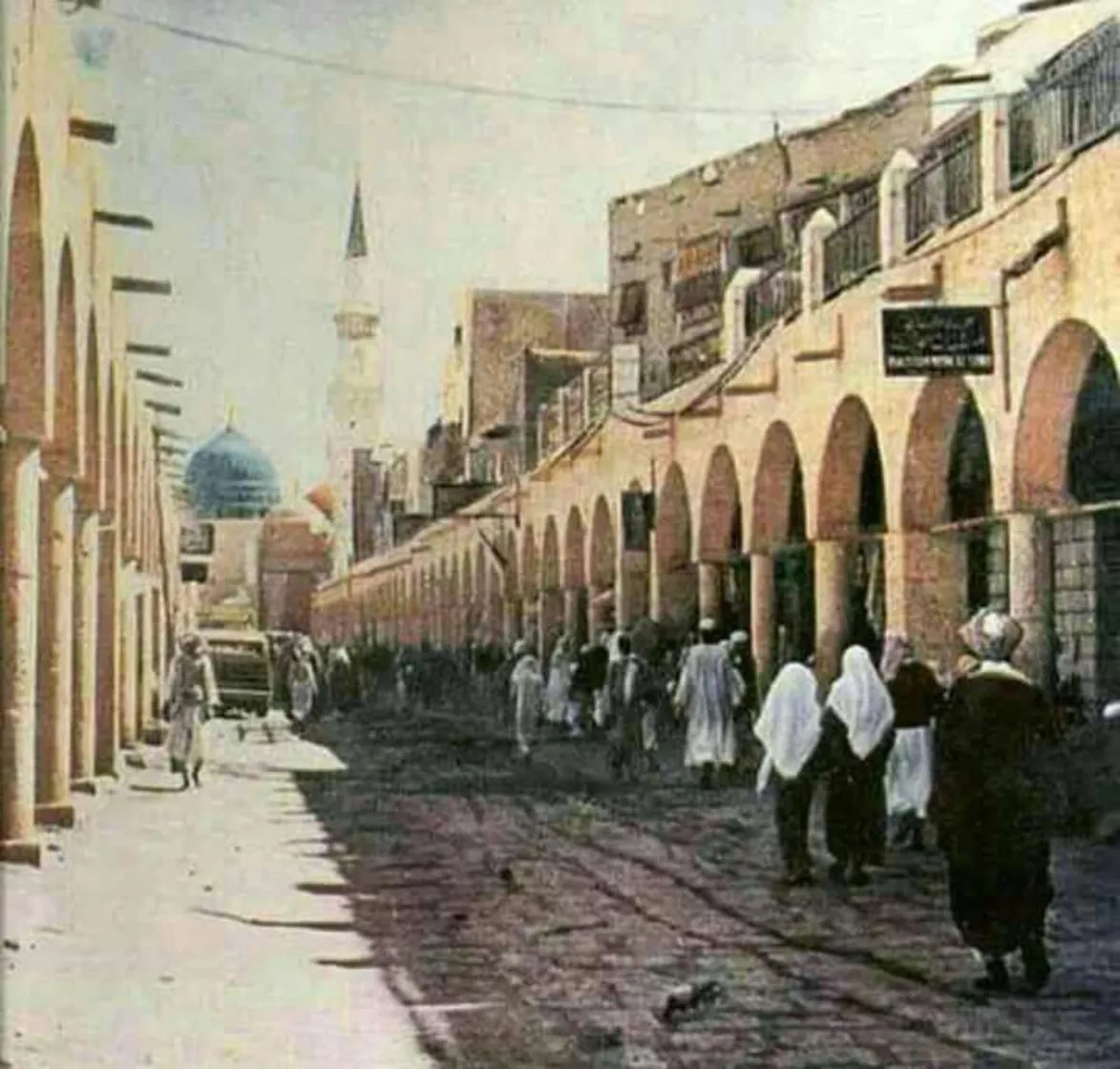
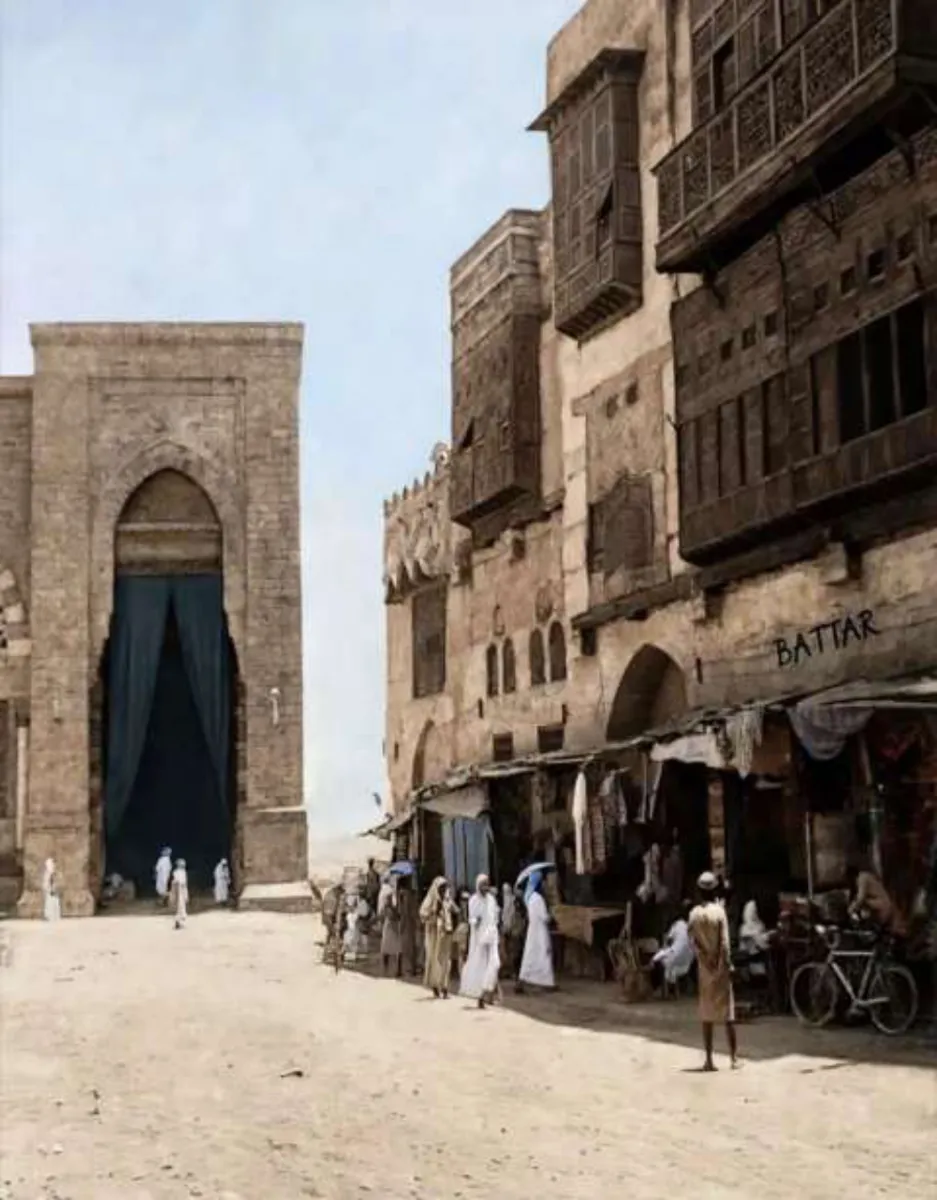
Zaki stood on the last step of al-Ayniyya Street, then turned and looked back, his gaze fixed on Bab al-Salam of the Prophet's Noble Mosque, a smile of hope dawning on his lips. He nodded and said to himself: "My Lord is testing me, and I will pass this test." He said it fully convinced that God would help him get past the problem he faced. For although he had gone to Uncle Bakr, the father of his friend Uthman, in Suwayqa, as the two had agreed the night before, he had found nothing there to resolve his predicament, for the man had said to him: "Son, you know Ramadan's right at the door, and I've got to buy stock for the season. And then, I want to tell you something, just don't be upset with me: why don't you rent a simple old house that fits your means and keep yourself decently in it, seeing as you can't afford to rent a flat..?"
Zaki had not expected this answer from his friend Uthman's father, but he accepted it graciously. Nor had he forgotten that before going to Uncle Bakr's shop he had knocked on the door of Uncle Sulayman, who was bound to his father by a close friendship, and had found nothing there to ease his worry either. These setbacks only strengthened his resolve and his certainty, and he headed for the shop of Uncle Salih the cloth merchant, the uncle of his friend Isa, hoping to find someone who knew him; but he was disappointed, for he found only one of the workers, who had no say in anything. He had it in mind to stop by his friend Salim at his father's shop on al-Ayniyya Street, hoping he might help him through his ordeal, and indeed he found him sitting as usual behind the piles of kolondi copperware, the teapot ready. So he sat down and began to tell him his story.
When Zaki graduated from the College of Education in Makkah, his lot was to be appointed to the city of Buraydah, the capital of al-Qassim. After he had spent two years there, and only after much difficulty, his transfer to Madinah came through, which was what he had dreamed of. For Tayba the good was dear to his heart, the beloved whose love had grown in the depths of him since his earliest childhood, when he used to come to her from Makkah with his family almost every year, and they would sometimes spend a month or more there.
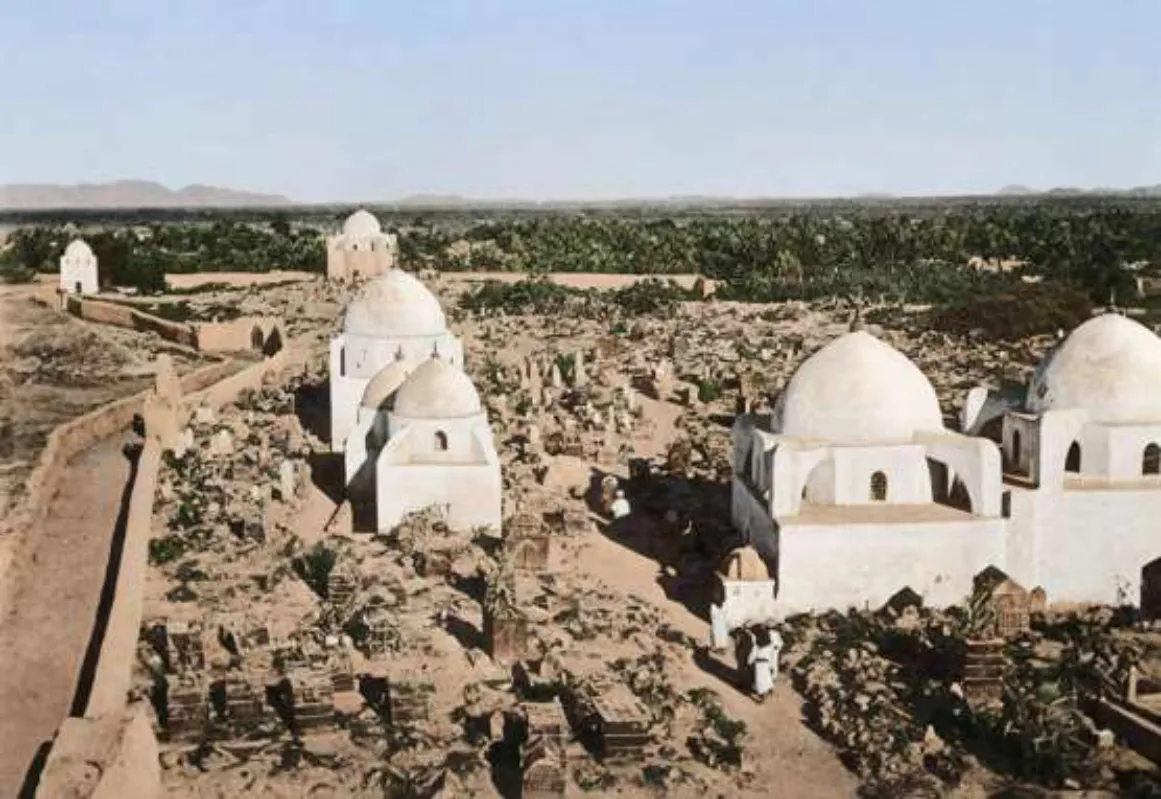
His memory still recalls many traces of those fragrant visits, for Madinah holds within him the finest images and the most beautiful meanings. The homes of its people encircled the Prophet's Noble Mosque as a bracelet encircles the wrist. He still remembers how the women would jostle the men visiting al-Baqi', and how some of the graves were topped with domes and all but smothered by the crowds of men and women visitors. And he still remembers Ayda, the disabled woman who would be placed in a crude handmade cart to receive alms at the exit of Bab al-Majidi, her hoarse voice barely making it past her lips.
Among the memories of Madinah that Zaki keeps is the start of the demolitions for the first Saudi expansion of the Prophet's Noble Mosque in 1372 AH, when he was no more than five years old, and how he, his maternal uncle Fathi and the sons of Uncle Ubaydullah al-Mukhrij would run after the dump trucks of the Bin Ladin company as they carried away their loads of rubble, shouting at the drivers in small voices that hardly anyone but themselves could hear.
All those images came pouring out of his store of memories as he stood on the last step at the head of al-Ayniyya Street, gazing at the Haram with a smile. Nor had he forgotten the hardest thing he had gone through, with his oldest friend in this pure town, when he visited him at his workplace, certain that he would solve the problem for him. But the friend surprised him with something he never expected, saying to him, quite coldly: "Why don't you take a loan from the bank, then pay it back, since you're in need..?"
Those words were like a thunderbolt that burns the green and the dry alike. It had never once crossed his mind that this man, known as he was for his piety, would, instead of helping him in his ordeal, ask him to sink into the swamp of what is forbidden. Yet, as was his habit, he took it with a smile, certain that God would help him so long as he was trying to pass the test with competence.
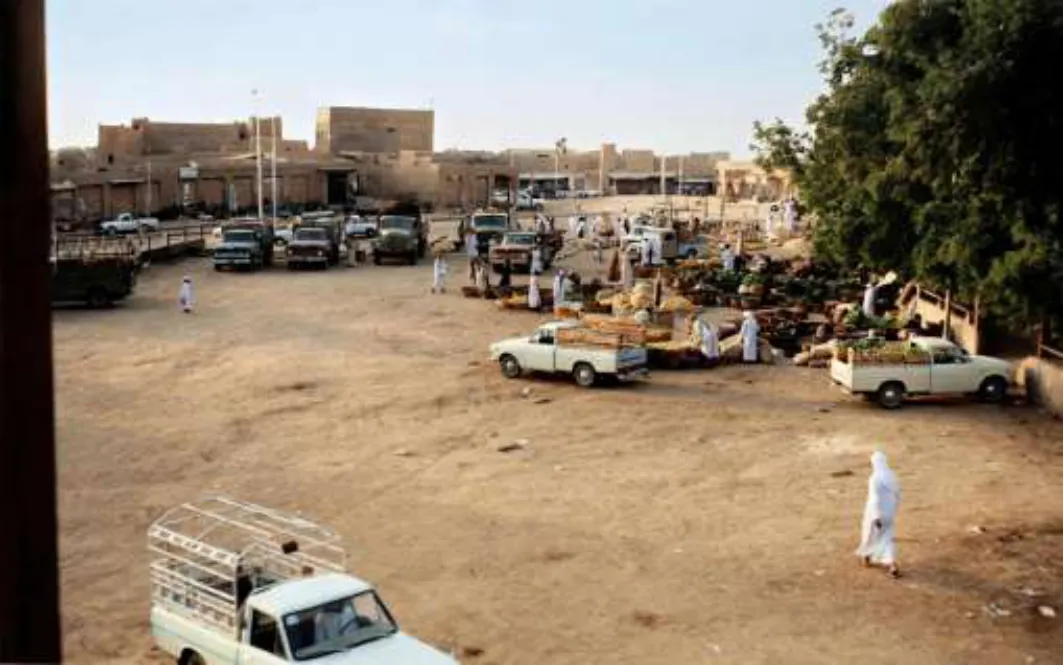
When Zaki left al-Qassim for Tayba the good, he was surprised by something he had never reckoned with: apartment rents were ablaze. For more than a week, after searching and combing through many of Madinah's neighbourhoods, he could not find a single flat renting for less than fifteen thousand riyals a year, and many flats cost no less than thirty thousand, whereas in Buraydah he had paid about two thousand riyals a year for his three-room flat in an excellent location, very close to the main vegetable market in the centre of Buraydah, which the people of the region call al-Jarda.
In 1396 AH came the beginning of the boom, which had its negative effects on every aspect of life in society. People's circumstances changed across the board: how many destitute poor were transformed and joined the ranks of millionaires, how many social ties came apart, how much people changed toward one another, and how many people were transformed and became destitute!..
When Zaki moved from al-Qassim to Madinah, his monthly salary did not exceed two thousand riyals, although more than two years had passed since his appointment and despite the raises in the salary scale. But none of that left a clear mark on the economic life of ordinary employees, for prices raced the pay rises: no sooner was an official decree of any salary increase issued at night than it was accompanied by a sharp rise in the prices of foodstuffs and other goods. Apartment rents, too, kept pace with those changes to the letter, and so Zaki could not find a suitable flat for himself and his wife, even one of just two rooms.
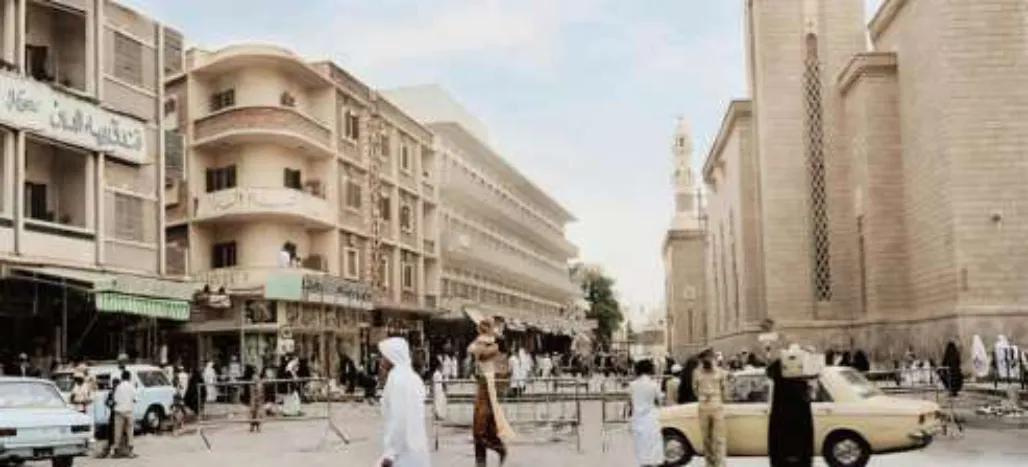
When Zaki could not find what he wanted, he decided to consult one of the real-estate agents, hoping he might help him over the obstacle. After he finished the afternoon prayer at the Prophet's Mosque, he headed for Quba al-Tali' Street and entered the al-Sabr Real Estate office. He had no acquaintance with the owner of the office, but he steeled himself, made up his mind, and went in to him with a greeting. When he sat down he began to tell him his story: how he could not rent a flat even after nearly a week of searching and combing, unable to meet his need, for flat prices were fire and his salary was limited; he and his wife were staying at the Baha al-Din Hotel beside the mosque of the beloved Chosen One, peace and blessings be upon him, and to this day he had no more than four thousand riyals in his pocket!..
The owner of the office asked him to go to the al-Mughaysila quarter and pointed out the location of the house, telling him that the owner of the building was a friend of his who never refused him a request. Zaki said to him: "I've already been to him, and he showed me the flat, and it's just right, but he apologised that he doesn't rent it to anyone, because he has daughters and worries about them." The office owner said to him: "Don't worry, I'll ask him, and God willing he won't let you down."
The next day, when Zaki knocked on Uncle Zakariyya's door and told him what had happened with the real-estate agent, he agreed to rent him the flat and asked him for the sum of eight thousand riyals, counted out in cash. Zaki had no choice but to agree, though he had only half that sum; he asked him for some time, since he had only four thousand in hand and would try to complete the amount soon.
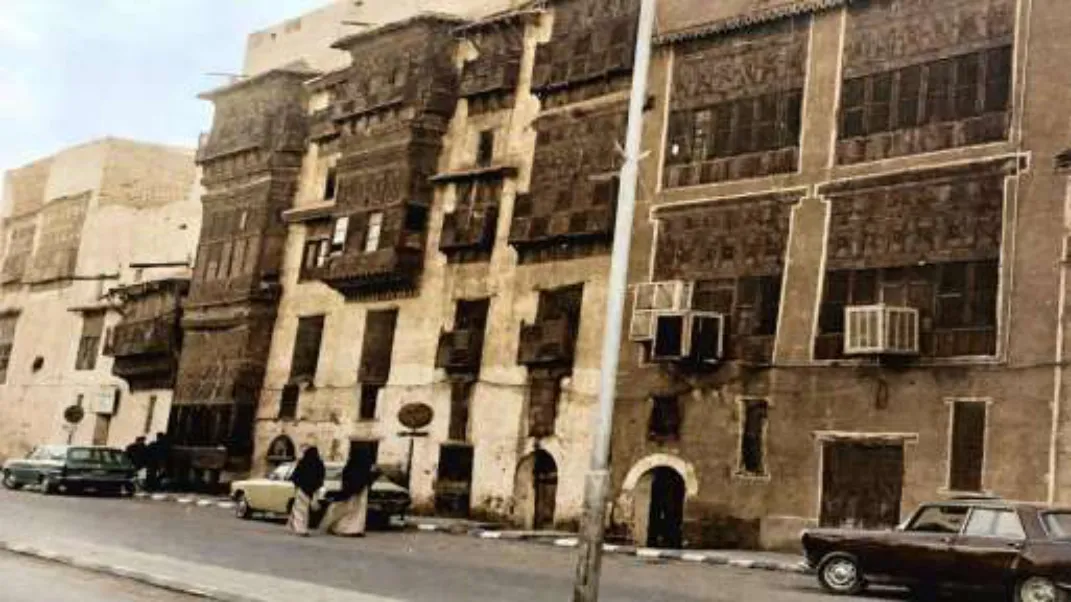
No sooner had night fallen than the flat held Zaki and his wife Ruqayya, and it suited them very well: it had three rooms and a decent hall in the middle, a spacious kitchen, and it was on the ground floor, while the owner of the building and his family lived on the upper floor. Al-Mughaysila was known as a quiet quarter, fairly close to the Haram, and Zaki found nothing to trouble him in this location; its advantages were many, as though God had sent it to him on a golden platter..!
After the afternoon prayer on Wednesday, Zaki was standing in front of the house with the owner of the building, Uncle Zakariyya, who surprised him by saying: "The day after tomorrow is the first of Ramadan, and God willing, after the Friday prayer you'll bring the rest of the money, four thousand riyals, or take your furniture out of the flat!"
The surprise did not shake him; his answer was ready: "Don't you worry..!"
He said it with his certainty in his Lord unshaken for a single moment, though he had no more than four thousand riyals and no idea how to come up with the rest of the sum. He went into the flat after taking leave of Uncle Zakariyya, with no sign of tension or fear of the unknown on his face, and said to his wife: "The landlord wants the rest of the money tomorrow after the Friday prayer, and I've got nothing but God's cover. Tell me, what do you think, Ruqayya..?"
Ruqayya had no ready answer, but she said to him: "Well, ask the family in Makkah, I mean your father or mine. The main thing is, don't carry the worry, Zaki." He said to her with complete confidence: "I don't want to ask anyone from the family in Makkah, and God willing it'll work itself out..!"
When Zaki finished telling his story to his friend Salim, Salim said to him: "Look, I've got a bit of money at home, I think it's two thousand riyals. Don't worry, come by after the evening prayer and you'll find it ready, God willing." Zaki breathed a sigh of relief, for the threads of the problem were beginning to unravel. He remembered his friend Hamid, with whom he usually spent the time between the sunset and evening prayers at the al-Anbariyya casino, sipping tea and exchanging their concerns about ideas and culture. He quickly took his leave of Salim and set off for Hamid's house on al-Anbariyya Street. When he rang the bell, Hamid came down to him with his usual smile and took him by the hands to go up to the upper floor where the sitting room was. Within minutes they were sipping mint tea, and so as not to waste time Zaki began explaining his story. No sooner had he finished pouring out his troubles than Hamid gave him the good news that he had the rest of the money, and within minutes it was in his hands. At that he praised God and breathed a sigh of relief once again. On Friday morning the amount owed to the landlord was ready in his hands, "with a kiss on the hand on top", as the saying goes.
The landlord's words and his way of demanding the full rent did not create any problem between him and Zaki. The days proved that the man and his family were neighbours who could never be forgotten; besides, he was known among everyone who dealt with him as a fair and frank man, and he was without doubt in the right. So it never crossed Zaki's mind to take offence, and each time Zaki and his wife became more certain that this family embodied the people of the city of God's Messenger, peace and blessings be upon him, in their good character, their fine hospitality and their irreplaceable neighbourliness.
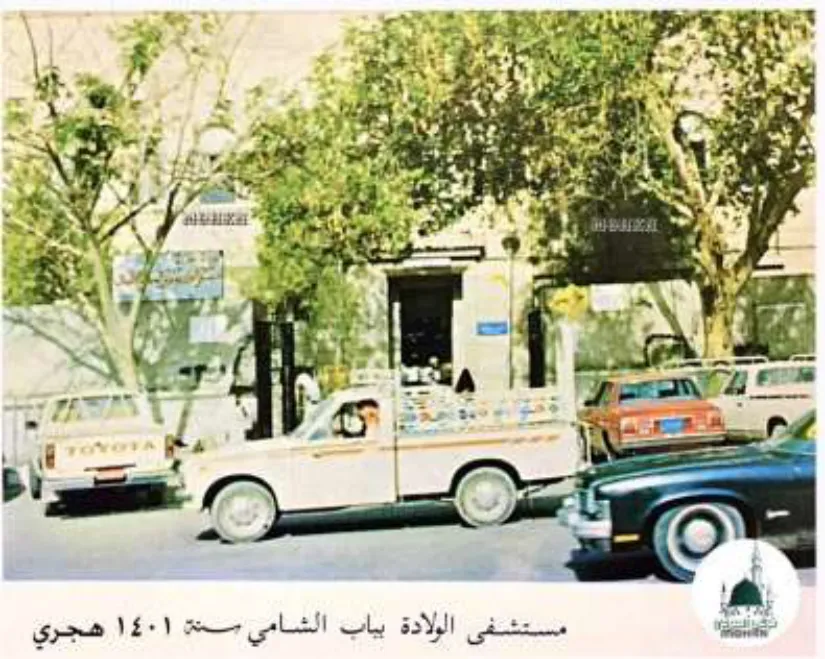
One day Zaki's wife was in pain from a haemorrhage she had suffered, and he had to take her to the Maternity Hospital at Bab al-Shami. The doctor decided to perform a curettage on her, which meant she had to stay in the hospital. Zaki tried to get freedom to come and go so he could stand by his wife, but the doctor told him firmly that this was not possible, and informed him that she needed blood and that he must arrange it. But that was not needed in the end, for the amount of blood she required was provided.
While Ruqayya was in hospital, Zaki was alone at home, but his neighbours did not forget his loneliness and would invite him to have lunch with them. When his wife came back home, the neighbours honoured the two of them with a complete spread every day, especially at midday; indeed, Zaki had only to crave a particular dish to find it set before him more than once.
The neighbourliness of the family of Abu Hassan, Uncle Zakariyya, left a deep mark in the hearts of Zaki and his wife Ruqayya, something only an ungrateful person would deny, for they were exceedingly kind and good neighbours. But it did not last long: at the end of the year the Ministry's decision came transferring Zaki to Jeddah. Yet kindness endures, and good neighbourliness can never be forgotten.
The story as published: View the original Arabic edition (PDF)
How to cite this text
Fathi, Siraj Hussain. “On al-Ayniyya Street.” 1448 AH. [Arabic: في شارع العينية.] Siraj Hussain Fathi website, https://siraj.my/en/story.php?id=16 (accessed 24 November 2026).