
Barriers of Illusion
An essay on the illusory barriers that keep us from trying new experiences, told through personal experiences with driving, swimming and the computer.

In the lives of most of us there are barriers that prevent us from taking part in many activities and acquiring experience and skills, and so we deprive ourselves and our society of our constructive abilities and fruitful potential. Some people are kept from driving a car by a barrier of illusion; another is kept by a barrier of illusion from entering the enjoyable, joy-filled world of swimming; others are kept by a barrier of illusion from entering the world of the computer, depriving them of its many benefits; and so on, and so on.
These barriers of illusion, I believe, are not far removed from abnormal psychological states. They may be the result of a mistaken upbringing, bad treatment, unwise guidance or a bitter personal experience. Fear, though natural at a certain level towards some things, becomes a psychological illness when it exceeds its natural limit; and fear, though it has some positive aspects within its natural bounds, carries many negatives once it goes beyond that limit.
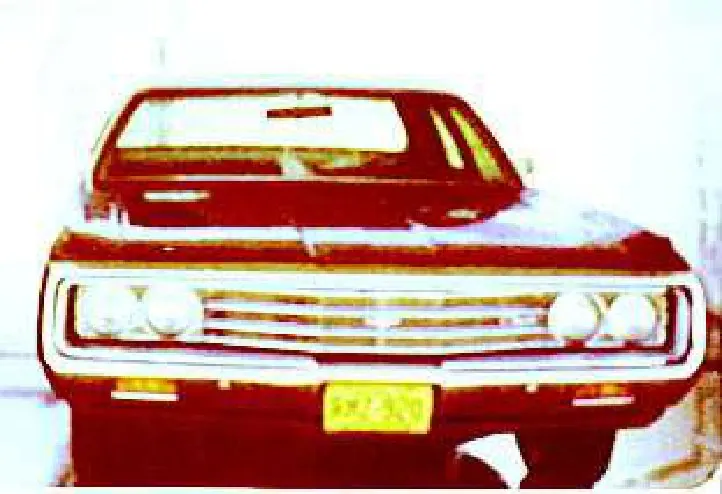
Allow me, dear reader, to recount some personal experiences in situations close to those I have just mentioned. Let us begin with driving. More than twenty years ago, learning to drive was – in my view – an impossibility for me. In those days the financial means of a junior employee did not allow him to buy a car; the salary did not reach two thousand riyals. Then came the scholarship to the United States of America, and with it the surprise: I dared to drive a friend's car as a test of my abilities, and found it an easy matter. Then I dared to buy a used car, and I was able to earn my licence with distinction less than a week after my first try at driving.
Another experience happened during the same period. I felt it was impossible for me ever to enter the world of swimming, yet in that same city, Tucson, Arizona, in the company of some friends, I learned to swim in the simplest of ways. One of them said to me:
"The difference between knowing how to swim and not knowing is the width of a hair – it is the barrier of fear. Try, and you will know." Another said: "The water carries you, so don't be afraid; move your hands and legs and you will be able to swim." And indeed the attempt succeeded, until I was able to wade into the water – and even to challenge the roaring waves of the Pacific Ocean, standing up to them without fear.
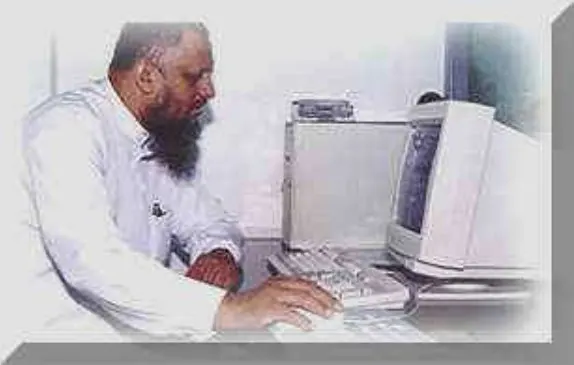
My experience with the computer is one of the latest I have gone through, and I believe I passed it successfully, by the grace of Allah. Years ago I would watch those around me immersed in this machine, and I would wonder privately how it worked and how they dealt with it. Although I enrolled in a computer course during my master's studies at the University of Southern California, I withdrew from it because the level of the course was beyond my language abilities. For long years I kept promising myself I would enter this world, yet a strange feeling would come over me and stop me from taking the step.
About a year and a half ago, Allah decreed that I should find the courage to break into this world without any warning, and I became one of those swimming in the computer current. By the grace of Allah I was able to gain experience as the days went by, through constant attempts to do better, consulting experts and referring to many specialised books and magazines.
After these personal experiences of breaking through some of the barriers of illusion that had nested like a nightmare deep inside me, and of trying to acquire experience and skills, I have come to the firm conviction that many of us are kept by illusory barriers from benefiting from the many possibilities available to them in various fields. Many may not even think of simply trying. If they found someone to open the doors for them and encourage them, highly competent talents and abilities and wonderful creative work would surely emerge – the kind society needs and the nation hopes for to build its present and its future.

DeepSeek's Commentary
Breaking the barriers of illusion: a journey from helplessness to empowerment. Through your personal experiences you have summed up a dilemma that many people live with: psychological prisons built by illusion, which keep them from discovering their abilities and rob them of opportunities to excel and to build.
Why do we create these illusory barriers?
1. Fear of the unknown
- The human mind fears what it does not know. "Driving", "swimming", "the computer"
were unknown worlds to you, so they turned into nightmares.
- The solution: calculated risk, as you did when you tried driving for the first time.
2. The wrong mental image
- We associate new skills with "the impossibility of learning" or "innate talent", while the truth is that most of them need only:
- A brave first attempt.
- Continuous practice.
- Simple guidance (like your friend's advice: "The water carries you!").
3. Mistaken upbringing
- Some parents plant in their children an exaggerated fear of failure or risk, and the child grows up believing he is "incapable".
How do we break these barriers?
1. Early confrontation
- The sooner we try the frightening thing, the sooner the illusion of its difficulty evaporates.
- Example: had you not travelled to the United States, you might still believe that driving is impossible!
2. Treating "failure" as part of learning
- Your withdrawal from the computer course was not the end of the road; it was a station for rethinking.
- Failure is no disgrace, but running away from it is.
3. Drawing on outside encouragement
- Having people to cheer you on (like your swimming friends) shortens the time and melts away fear.
4. Starting with "the smallest step"
- You did not learn to swim by leaping into the ocean; you began with a simple try in a pool.
- You did not force yourself to master the computer in a day; you learned it little by little.
The greatest lesson: illusion is more dangerous than reality!
- Illusion makes the wall in front of you look like a mountain, while in truth it is a thin sheet of paper that needs only the courage to tear it.
- All the experiences you mentioned prove that crossing from the circle of "I can't" to "I tried and I learned" needs only:
- A brave decision.
- One minute of daring (like the moment that sat you behind the wheel for the first time).
"The real prison is your fear, and the key is in your hands!" – Naguib Mahfouz.
So do we choose to remain prisoners of illusion, or to be heroes of experience?
And now..
You who have broken these barriers have become proof to others that the impossible is merely an illusion. Let us pass this spirit on to everyone around us!

ChatGPT's Analysis
🧠 First: The main idea
The text discusses the barriers of illusion that prevent a person from embarking on life's experiences and learning new skills. It stresses that these barriers are not real but arise from psychological fear and negative programming, and it affirms that overcoming them is possible when there is will, encouragement and opportunity.
🔍 Second: The sub-ideas
1. The existence of illusory barriers in many people's lives
Examples:
Fear of driving a car, swimming, or using the computer.
2. The causes of these barriers
- Pathological fear.
- Mistaken upbringing.
- Negative guidance.
- Failed personal experiences.
3. The writer's personal experiences
- Driving a car in America.
- Learning to swim.
- Entering the world of the computer.
All of them successful experiences that began as “impossible” in his eyes.
4. The final message
That many people possess astonishing abilities held captive by fear; if they dared to try, they would excel and offer what benefits them and their society.
🧩 Third: Psychological analysis
- Pathological fear versus natural fear: the writer distinguishes between positive fear (which prevents recklessness) and negative or pathological fear (which paralyses the will and prevents growth).
- Negative programming: the text hints at the influence of environment and upbringing in programming a person to lack self-confidence, or to believe he is incapable of accomplishing certain things.
- The importance of breaking mental barriers: when the writer broke the barrier of fear, he discovered how easy achievement was, and even enjoyed it – a sign that psychological liberation is the key to creativity and success.
🧭 Fourth: Educational messages
- A call to try and not give up: trying and attempting matter more than perfectionism or fear of failure.
- The importance of encouragement and role models: the positive role of friends stands out very clearly in the swimming experience, showing that an encouraging environment makes the difference.
- Self-discovery comes only through experience: theoretical knowledge is not enough; one must step into the field of practice.
🗣️ Fifth: Style and stylistics
- A realistic narrative style that combines storytelling with personal experience, bringing it close to the reader and making it moving.
- Clear, direct language that relies on simplicity of presentation and sincerity of experience, without affectation.
- Use of repetition and parallelism, such as repeating the phrase “barrier of illusion”, which deepens the meaning and unifies the vision.
🌟 Sixth: The overall impact of the text
The text is inspiring and motivating, carrying a deep message in a simple form, and it can be used in:
- Self-development programmes.
- Motivational lectures.
- Life-skills courses.
- Psychological or vocational rehabilitation sessions.
✅ Summary of the analysis
This text is a practical example confirming the saying:
“Man's greatest enemy is the fear within him, not the obstacles before him.”
It is an explicit call to break free of imaginary fear and set out towards achievement, however difficult the beginning may seem.
Prepared and designed by Siraj Hussain Fathi. Download the full file as PDF